Willard Motley’s Childhood Home

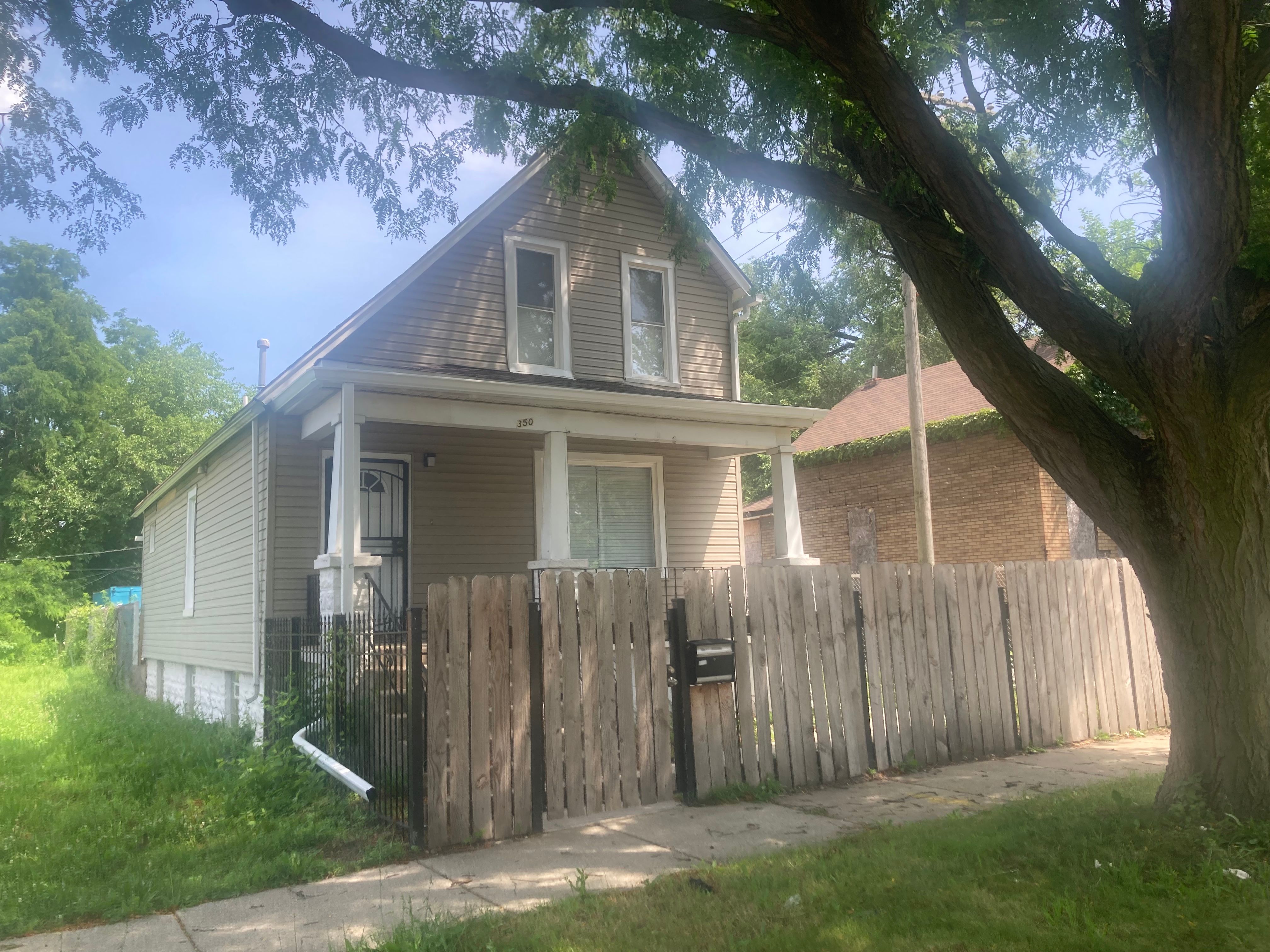
350 W. 60th Street
Chicago, IL 60621
(Englewood)
Ever since I was a little kid of eight or nine I’ve wanted to be a great writer and to have a great friendship in my life.
Willard Motley’s diary entry from 1931.
This two-story, 1,000-square-foot residential house includes three bedrooms, two bathrooms, an unfinished basement, and aluminum siding. Built in 1890, the property was purchased by the Motley family in 1907, providing a stable, working-to-middle-class environment that deeply influenced the author's later work. The house was headed by his maternal grandparents, Archibald Motley Sr. and Mary L. Motley. To protect social propriety, his biological mother "Flossie" was presented as his older sister, and the notable Jazz Age painter Archibald J. Motley Jr. (his biological uncle) was raised alongside him as his brother. Motley was educated at Champlain Grammar School and Englewood High School. It was during his time living on 60th Street—at just 13 years old—that he sent a short story to the Chicago Defender. This led to a regular column where he became the first person to write under the famous pseudonym "Bud Billiken." Motley lived at this address until around 1930, after which he traveled briefly, taking on odd jobs in dress factories and breweries. In 1939, he permanently left the Englewood family home to immerse himself in the Maxwell Street neighborhood, where he researched the social conditions that fueled his writing.
During Willard Motley’s childhood and young adult years (roughly 1907 to 1930), Englewood was a booming, prosperous, and overwhelmingly white working-to-middle-class enclave. It bore almost no resemblance to the economically divested, predominantly Black neighborhood it became later in the 20th century.
Motley’s debut novel, Knock on Any Door, tells the story of Italian-American altar boy Nick Romano’s devolution into a cop killer. The Romano family is forced, after the father’s false imprisonment, into a vile and violent Maxwell Street neighborhood tenement. The social environment leads Nick into ever-more-damaging choices, including a gambling spree that put the family in further debt and leads to wife Emma’s suicide. After Nick’s arrest, the novel shifts to the courtroom, where lawyer Andrew Morton argues that systematic neglect led to this crime. Nick, who thinks that a kid from the slums stands no chance of success, lives by the enduring motto, “Live fast, die young, and have a good-looking corpse.” The line was altered slightly for the movie scene in which Nick (played by John Derek) instead says, “Live fast, die young, leave a clean old corpse.” The novel sold an almost unprecedented 50,000 copies in the first three weeks after its May 5, 1947 release, and went on to reach 10 million in worldwide sales. The reviews were glowing: Chicago Tribune, New York Times, the Atlantic Monthly, and the Saturday Review of Literature noted various outstanding features of the story. Critic Nathan L. Rothman, writing for the Saturday Review of Literature on May 10, 1947, said the novel was a “profoundly honest” assessment of urban decay. The movie, co-written by Daniel Taradash, who spent much of his childhood in Chicago, also made it to the top of the box office hits.
Though not immediate, Motley critics, led by academics, drip, drip, dripped their disapproval of a Black writer portraying white characters and struggles. This continued as Motley’s next two novels also focused on white characters (though his final novel featured Mexican characters). Critics like Robert Bone accused Motley of abandoning his community’s struggles.
Rick Kogan, writing for the Chicago Tribune on January 12, 2022, said, “One reason perhaps that Motley has not been held in such high regard is that, though he focused on such issues as poverty, crime and injustice, the matter of race was rarely if ever addressed. Whenever asked about this he often replied, ‘My race is the human race.’ And so, he was never placed in the company of such other Black Chicago writers as Richard Wright and Gwendolyn Brooks.”