Events
Writing Chicago: New Fiction Set in Chicago
Saturday, September 12, 2026
3 p.m.
Printers Row Lit Fest
Digital Realty Stage
W. Polk St., at Plymouth Ct.
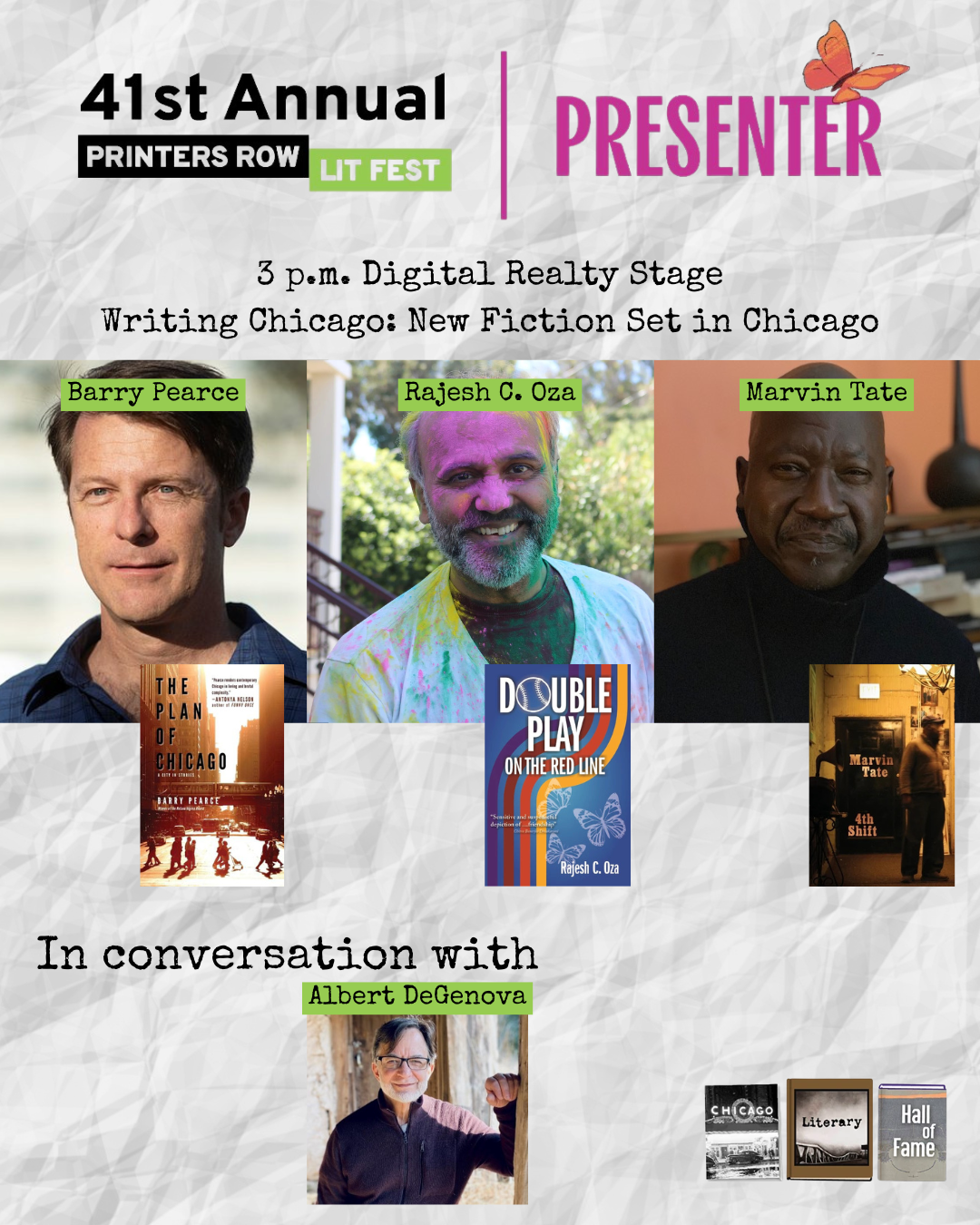
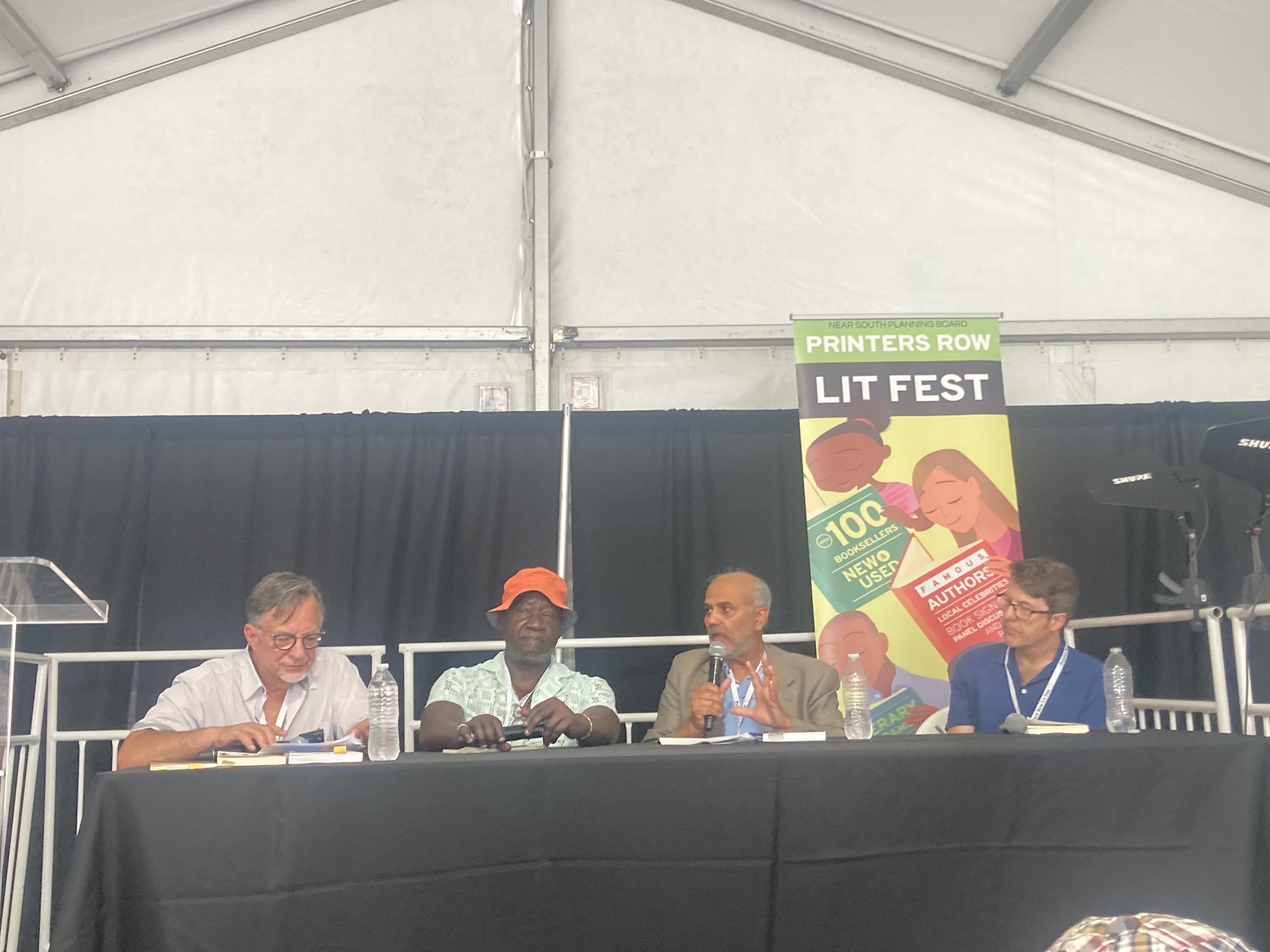
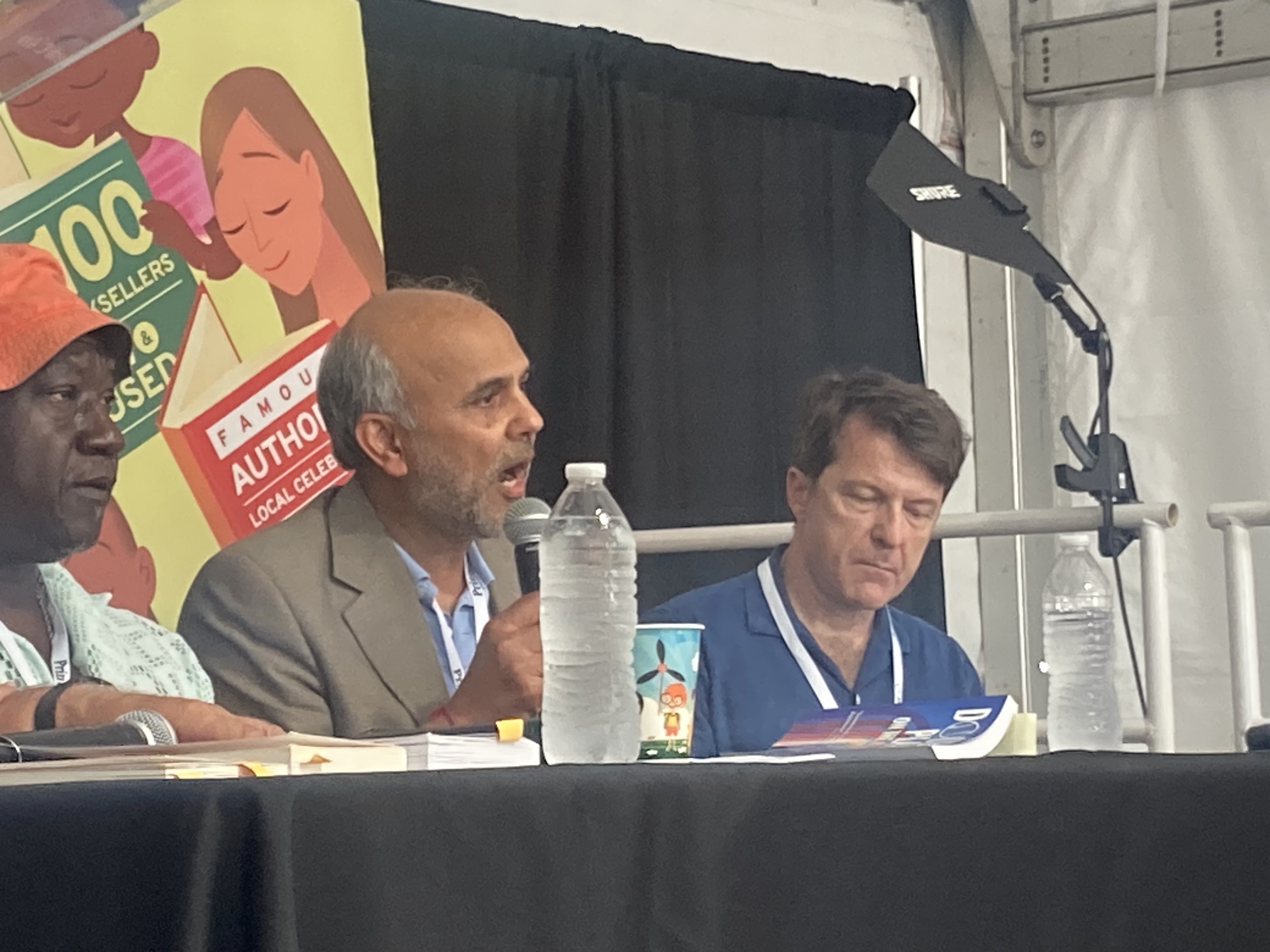
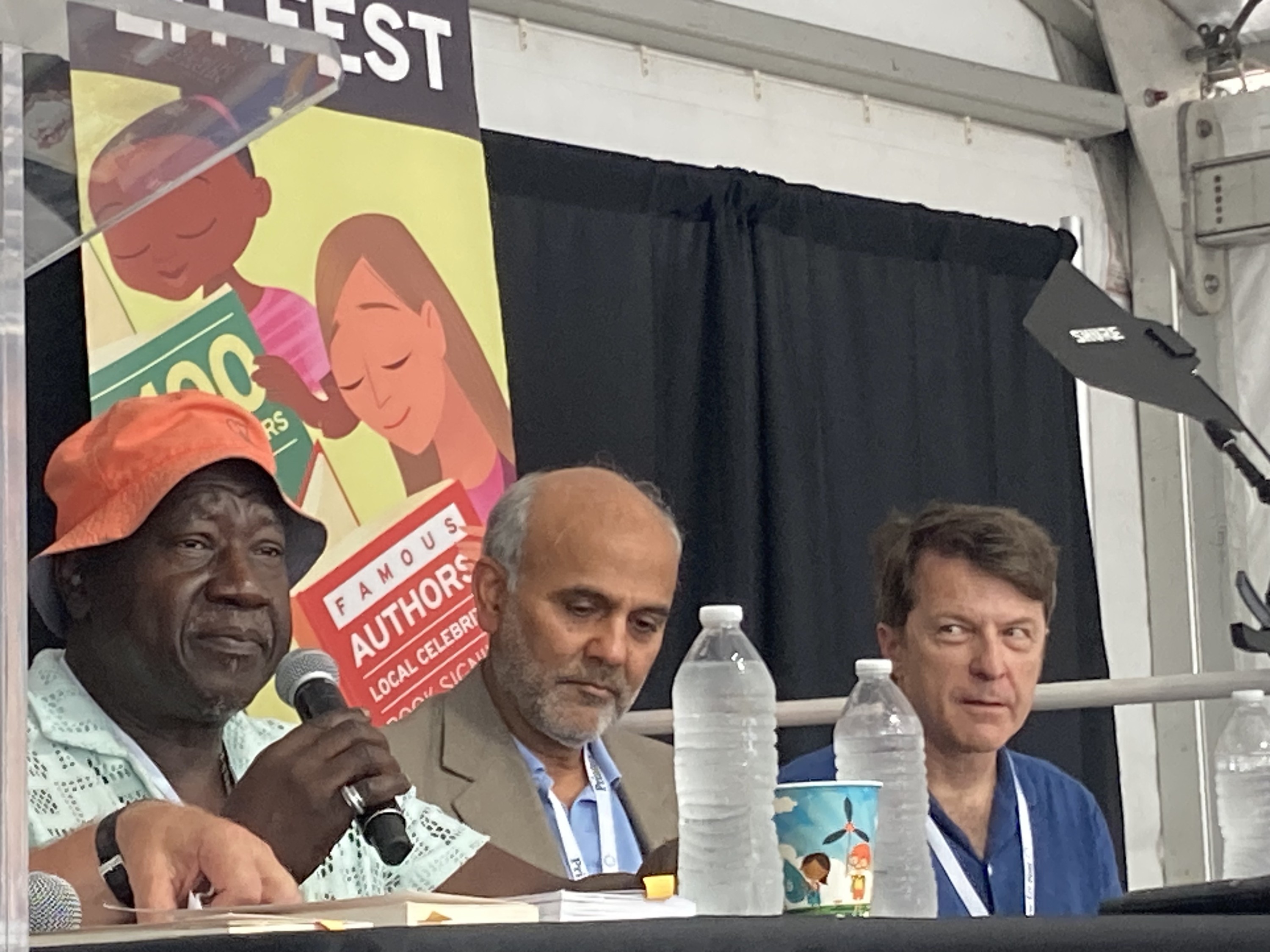
Writing Chicago: New Fiction Set in Chicago features Barry Pearce (The Plan of Chicago: A City in Stories), Rajesh C. Oza, (Double Play on the Red Line), and Marvin Tate (4th Shift) in conversation with Albert DeGenova (After Hours Press).
Presented in partnership with the Chicago Literary Hall of Fame.
Barry Pearce is the author of The Plan of Chicago: A City in Stories, a story cycle that received starred reviews in Kirkus and Booklist and prompted Chicago Magazine to call him “the modern-day Algren.” He has won the Nelson Algren Award Grand Prize, a City of Chicago Individual Artists Program grant, and an Illinois Arts Council Award. His fiction has appeared in Chicago Tribune, Cimarron Review, Colorado Review, Puerto del Sol, and elsewhere. He lives in Chicago, where he works as a ghostwriter and occasional teacher.
In addition to consulting and facilitating at Stanford University, Dr. Rajesh Oza writes columns, travel essays, book reviews, and baseball doggerel at Bardball.com. Several of his short stories have been published, including “Dr. Mango and Johnny Fish” in Living in America: Poetry and Fiction by South Asian American Writers. His longer nonfiction includes Globalization, Diaspora, and Work Transformation; Satyalogue // TruthTalk; and P.S., Papa's Stories. Raj’s debut novel, Double Play on the Red Line was inspired by his daughter’s experience with Northwestern University’s Innocence Project and published by Chicago’s Third World Press. An early draft was completed in Stanford’s novel-writing program.
Marvin Tate is an interdisciplinary artist, poet, musician, performer, and cultural worker whose practice explores memory, identity, Black imagination, and the transformative power of storytelling. Blending spoken word, experimental music, visual art, theater, and community engagement, Tate creates immersive works that challenge convention while fostering dialogue and connection. His performances move fluidly between improvisation and ritual, inviting audiences into spaces of reflection, resistance, and joy. Rooted in collaboration and artistic experimentation, his work bridges disciplines and generations, expanding the possibilities of creative expression. Through every medium, Tate celebrates the resilience, complexity, and boundless creativity of the human spirit.
Moderator Albert DeGenova is a poet, editor, and teacher. He is the author of five books of poetry and two chapbooks. In June 2000, he launched the literary/arts journal After Hours; he continues as publisher and co-editor. DeGenova holds an MFA from Spalding University in Louisville and is the retired Executive Director of Write On, Door County, a Wisconsin literary arts center.