Nelson Algren Boyhood Home

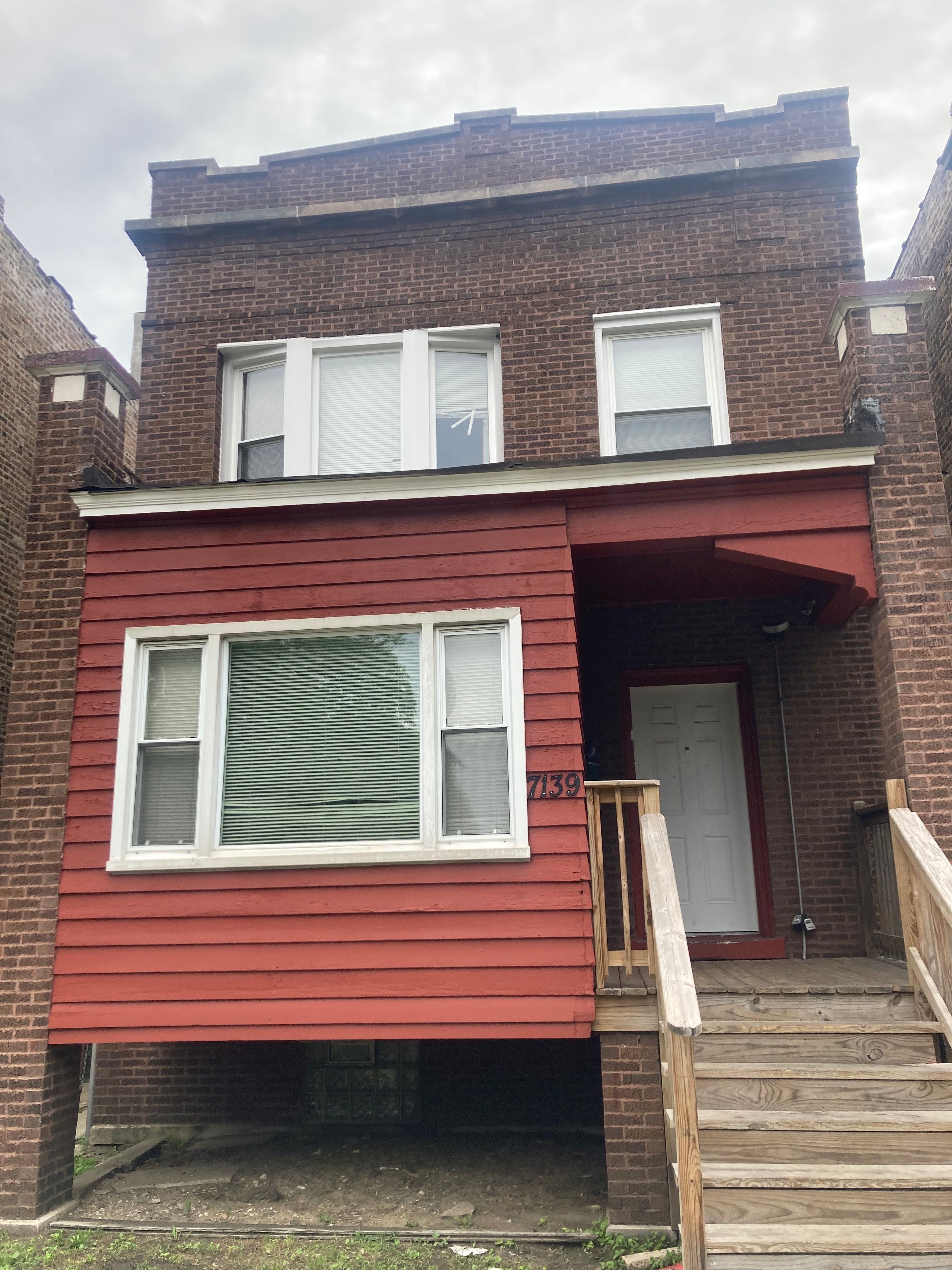
7139 S. Park Avenue/now King Dr.
(Greater Grand Crossing)
Then, as now, Chicago’s neighborhoods were defined by Catholic parishes, and Park Manor was under St. Columbanus, the patron saint of motorcyclists, the cross of its combination church-and-school building standing sentinel over all the little one-and-two-story brick and frame homes. Park Manor had yards and open prairies for playing Run, Sheep, Run, cowboys and Indians, or baseball, with boys discussing the heroic White Sox—Shoeless Joe, Eddie Cicotte, and Nelson’s favorite, Swede Risberg. In the war years, it was the Huns versus the brave Americans and English, with boys taking turns as enemies and allies. They used sunflower stalks as bayonets, and garbage slop tied up in scraps of burlap as grenades. They talked over tin-can field telephones, connected by wires through wooden fences, and feigned dramatic deaths in trampled prairie grasses. Trenches could have been reinforced with stolen red bricks from St. Columbanus construction projects…
Mary Wisnewski’s Algren: A Life
Nelson Algren (1909-1981) was born in Detroit, but in 1913, at four years old, moved with his parents, Goldie and Gershon Abraham, to a Chicago South Side Protestant neighborhood. He lived there until 1920, at which time the family relocated to 4834 N. Troy Street, in the Albany Park neighborhood. Algren depicted the Park Manor neighborhood in his epic book-length prose poem Chicago: City on the Make (1951). Then, after the family’s move to the north side, Algren depicts himself being teased for being a White Sox fan in his new North Side neighborhood. The Algren's large, extra-wide two-flat multi-family home featured a classic Chicago brick design typical of the era.
According to Colin Ashler’s essay, “But Never a Lovely So Real,” in the January 1, 2013 issue of The Believer, “…Algren had a sandlot sort of childhood. He delivered the Abendpost with a pushcart, and picked up discarded corks and bottles for pocket change. When the White Sox were in the World Series, Algren began calling himself ‘Swede,’ after Swede Risberg—the Swede walked pigeon-toed and so did Algren.”
Chicago writer Mary Wisniewski’s biography Algren: A Life (2016) describes Park Manor in 1913 as having “yards and open prairies for playing Run, Sheepy, Run, cowboys and Indians, or baseball.” According to Wisniewski, “The kids made bonfires in the vacant prairie lots on the chilly autumn evenings, and roasted potatoes, making them black on the outside, and soft and white within . . . People kept ducks and geese, and grew big vegetable gardens . . .”