James T. Farrell Apartment

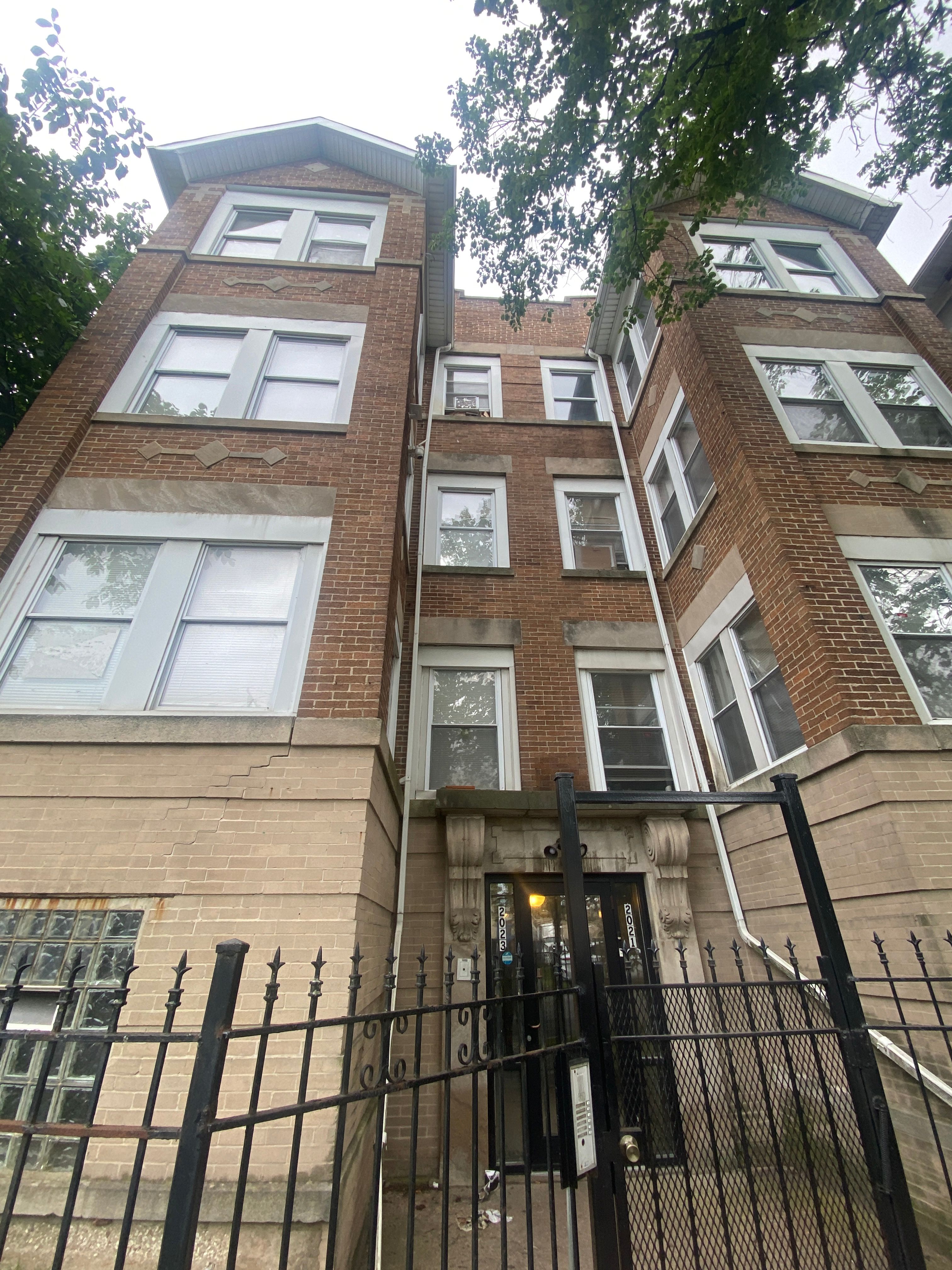
2023 East 72nd Street
Chicago, Il 60649
(South Shore)
James T. Farrell’s Studs Lonigan trilogy, which The Library of America ranked as the #29 most important English-language books of the twentieth century, is widely considered a critical portrait of the working class. A prolific writer, Farrell drew on his own experiences to document the lives of first and second-generation Irish Americans. In 1929, he began writing Young Lonigan, the first part of the trilogy, while living at this home. A Chicago Tribute Marker of Distinction has been erected at the site.
After Farrell’s years in Washington Park, he moved to the 72nd Street apartment as a young adult. He lived in this apartment from at least 1929, when he began writing the Studs Lonigan trilogy, until he left with his wife Dorothy Butler in 1931 to travel to Paris for a year. After that, he relocated to New York City. Farrell drew upon his childhood neighborhood of Washington Park to plot Studs' early life, and his South Shore neighborhood—including the 72nd Street area and nearby Jeffery Boulevard—to show how the Lonigan family's moves represented a downward trajectory and led, in part, to Studs' deterioration. In Judgement Day, the Lonigan family live on Jeffrey Boulevard, between 71st and 72nd Streets, very near this old apartment. It is there that Paddy Lonigan mumbles about, stares out the window at South Shore, slumps in his armchair, hides behind the daily newspaper, and generally internalizes the consequences of his financial ruin. It is there that Studs and his girlfriend Catherine discuss her unplanned pregnancy, all while trying, in such a cramped space, to keep their secret from his strict, Catholic parents. And it is there that a priest perfunctorily performs last rites as Studs lay on his deathbed.
The real-life model for Studs Lonigan, William Cunningham, lived at 7822 S. Luella Avenue at the time of his death. His character, life, and circumstances—he died of pneumonia at age 25—parallel Studs. Many neighborhood people, including the Cunninghams, were offended at what they considered Farrell’s unfair depictions. Cunningham was buried from Our Lady of Peace, on the northeast corner of 79th and Jeffery Blvd., in the lower church. The upper church wasn't completed and dedicated until Oct. 13, 1935. Now closed, it had a spectacular interior with shades of Belgian blue.