Gabriel Bump, Carlo and Sebastian Rotello’s Childhood Homes

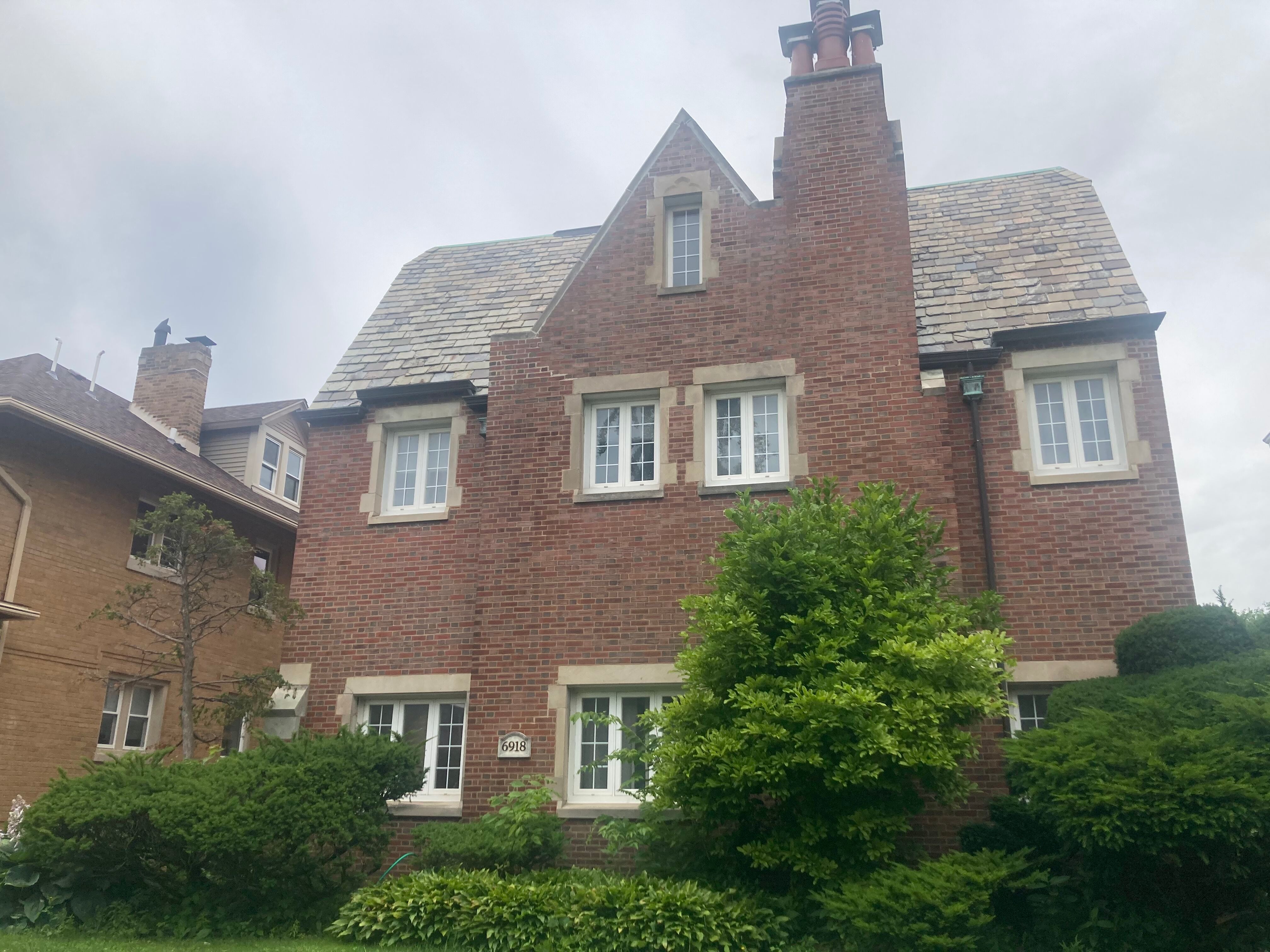
6918 S. Euclid Avenue
Chicago, IL 60649
(South Shore)
This is the Jackson Park Highlands, sixteen square blocks planned in the early twentieth century as a demonstration district featuring underground utilities, no internal alleys, and architecturally distinct houses set well back from the street and each other on generous lots…Known for being the home of Jesse Jackson, Ramsey Lewis, Gale Sayers, and other notable figures in black Chicago, the Highlands is as nice as South Shore gets; as nice as the South Side gets…
A block and a half into the Highlands, on the 6900 block of Euclid, I…end up in front of a high-shouldered Tudor-style brick house with a brick driveway and no front door. I lived there from 1973 to the fall of 1982, when I went off to college on the East Coast, where I wound up staying.” Carlo Rotella’s The World is Always Coming to an End
I remember Euclid Avenue. I remember yelling outside our window, coming in from the street. Grandma putting down her coffee. I remember Grandma holding my ankle, swinging my two-year-old self out the front door, flipping me right-side up, plopping me down next to the Hawaiian violets, plopping herself down next to me. I remember awe and disbelief. Gabriel Bump’s Everywhere You Don’t Belong
The Rotella family lived at 6918 S. Euclid from 1973-1989, when they sold their house to the Bump family. Sebastian Rotella occupied the back bedroom on the second floor before ceding it to his younger brother Carlo. Eventually, Gabriel Bump used that same bedroom, the Bump family living there from 1989 to present. Carlo and Gabriel planned a joint event, in which they’d talk about the effect of their writerly sensibilities of looking out at the world from that same childhood bedroom window, but the pandemic forced its cancellation.
Euclid Avenue rests comfortably inside a wealthier South Shore sub-community called Jackson Park Highlands, often just The Highlands. In addition to the notable public figures mentioned in Rotella’s South Shore study, writers David Mamet (6947) and Beryl Satter (6922) lived on the same stretch of Euclid.
Sebastian Rotella is a veteran foreign correspondent and investigative journalist, as well as a crime novelist. He has reported in more than 30 countries. He is a senior reporter at ProPublica, where he covers international security issues. His honors include a Peabody Award, Columbia University’s Moors Cabot Prize, and Italy’s Urbino Press Award, and he has been a Pulitzer Prize finalist. Sebastian Rotello’s 1998 nonfiction book, Twilight on the Line: Underworlds and Politics at the U.S.-Mexico Border, inspired songs by Bruce Springsteen. His three crime novels feature Valentine Pescatore, a U.S. Border Patrol agent who becomes an international private investigator. The series explores the global underworlds of organized crime, terrorism, espionage and migration, drawing on Sebastian’s years as a journalist. In his crime novels—Triple Crossing (2011), The Convert’s Song (2014) and The Rip Crew (2018)—Pescatore is a Chicago native who’s persistently homesick for his native city. In The Convert’s Song, Pescatore, living in Buenos Aires, encounters a childhood friend, singer Raymond Mercer, who is suspected of a terrorist attack.
Carlo Rotella has so far authored six narrative nonfiction books, often steeped in personal experience and often featuring Chicago characters, settings, and explorations. Carlo is as much a journalist and essayist as he is an academic. In October Cities: The Redevelopment of Urban America (1998), Rotella explores post-World War II urban deindustrialization and renewal, with Chicago and Philadelphia as primary case studies to analyze how literature and history document changing cityscapes. Good with Their Hands: Boxers, Bluesmen, and Other Characters from the Rust Belt (2002) dedicates several chapters to Chicago's famous electric blues music scene and its traditional musicians. The World Is Always Coming to an End: Pulling Together and Apart in a Chicago Neighborhood (2019) details the cultural history of South Shore, and how the neighborhood has changed across decades through the lenses of race, class, housing, and shifting community boundaries. What Can I Get Out of This? Thinking and Learning in the Creative Writing Classroom (2025) focuses on the craft of teaching and reading literature.
Bump is the author of three acclaimed novels, including Everywhere You Don’t Belong, set partly in Jackson Park during the riots of the early 2010s. Two characters in The New Naturals, Elting and Buchanan, experience abuse and callousness as homeless Chicagoans before fleeing for a better life in western Massachusetts. Bump’s childhood experiences play critical roles in his writing and sensibility. Just recently (in 2026), Bump received the Chicago Public Library Foundations 21st Century Award, as an outstanding emerging writer.
Reading, Viewing and Listening List
October Cities: The Redevelopment of Urban America
Good with Their Hands: Boxers, Bluesmen, and Other Characters from the Rust Belt
Family Properties: Race, Real Estate, and the Exploitation of Black Urban America
The World Is Always Coming to an End: Pulling Together and Apart in a Chicago Neighborhood