David Mamet’s Home

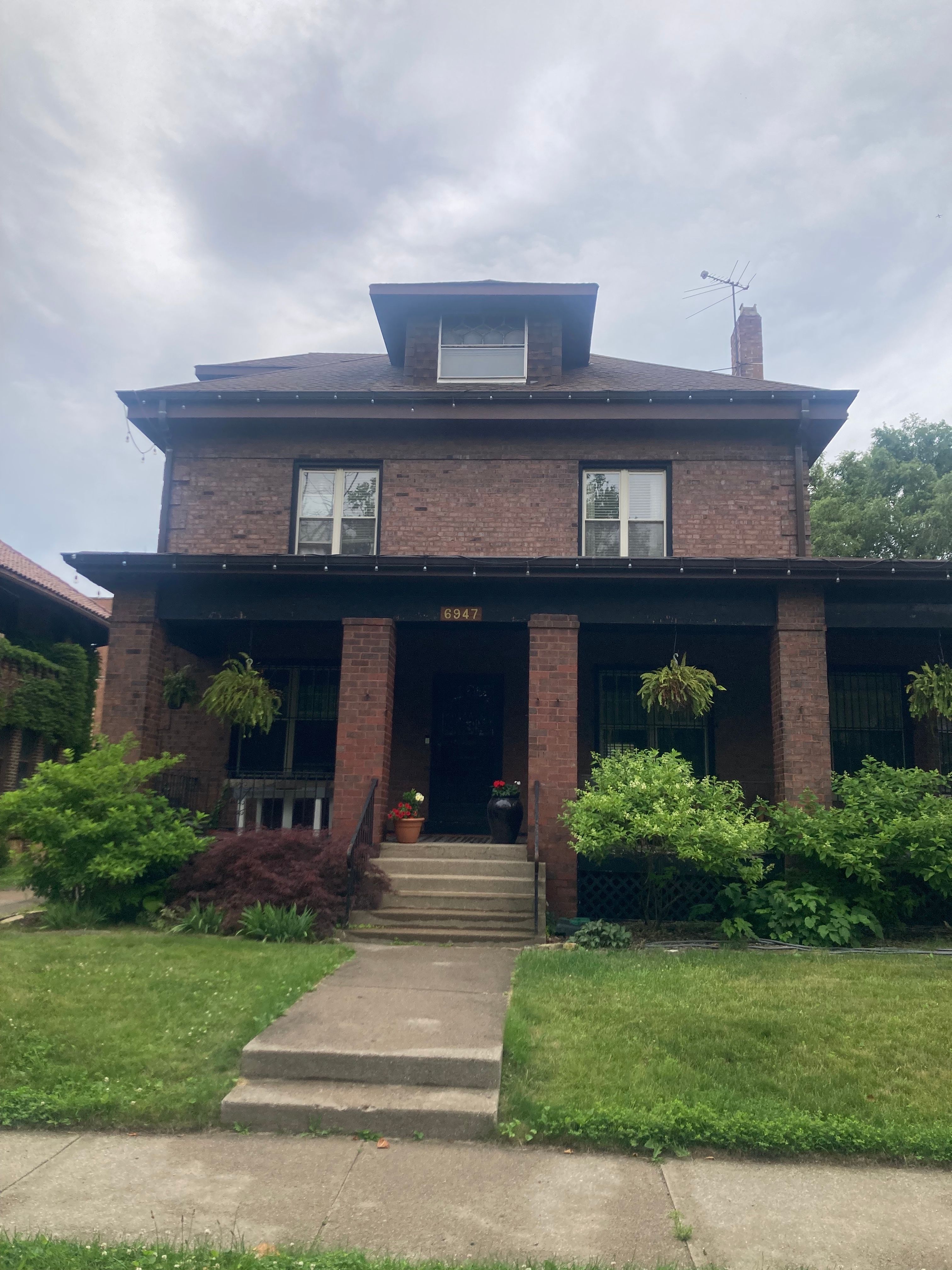
6947 S. Euclid Avenue
Chicago, IL 60649
(South Shore)
In John Lahr’s November 10. 1997 New Yorker profile, “Fortress Mamet,” he theorizes that David Mamet developed his famous ear for dialogue in his family home on Euclid. Mamet lived in that house until 1958, when he was 11 and his parents divorced. Lahr called the place “a capacious three-story red brick house that stood as a kind of totem to the Mamet family’s self-invention.” He wrote, “Bernie Mamet, a tough labor lawyer who represented over three hundred unions, and once argued—and won—a case before the Supreme Court, preached an exacting semantic gospel of precision, nuance, and observation. ‘The map is not the territory’ was one of Bernie’s mantras, which voiced his bedrock belief that nothing was all black or all white. He hectored his children to listen ‘with the inner ear,’ and, according to his second wife, Judy Mamet, played games with them to build up their powers of observation and memory.” In that same profile, David Mamet is quoted as saying that the Euclid house was devoid of “tradition”—meaning it possessed no color or any objects/decor representing history or nostalgia.
Mamet’s prolific output (36 plays, 29 screenplays, a dozen nonfictions books, and five novels) includes several works that recall or arise from his days living on Euclid Avenue. The Old Neighborhood, in particular, includes specific dialogue and scenes that draw from the Euclid home, his family life, and the South Shore neighborhood. So, too, does his essay, “71st and Jeffery,” originally published in the Chicago Tribune’s April 26, 1992 edition and republished in The Cabin: Reminiscence and Diversions. In the final moments of the movie version of Glengarry Glen Ross (the play version won the 1984 Pulitzer Prize for Drama), the Euclid address can be heard amidst the telephone chatter.