Beverly Arts Center

thebeverlyartscenter.com
2407 W. 111th Street
Chicago, IL 60655
(Morgan Park)
The modest homes are mostly brick stand-alones, none higher than two stories, with tidy yards and front doors painted eye-catching colors like canary yellow, or sky blue, or fire-engine red. There’s also the occasional two-flat or wooden four-square, as well as several houses of worship, all of the churches Christian and none of them the foot-stomping, shout-it-out variety.
Eric Charles May’s Bedrock Faith
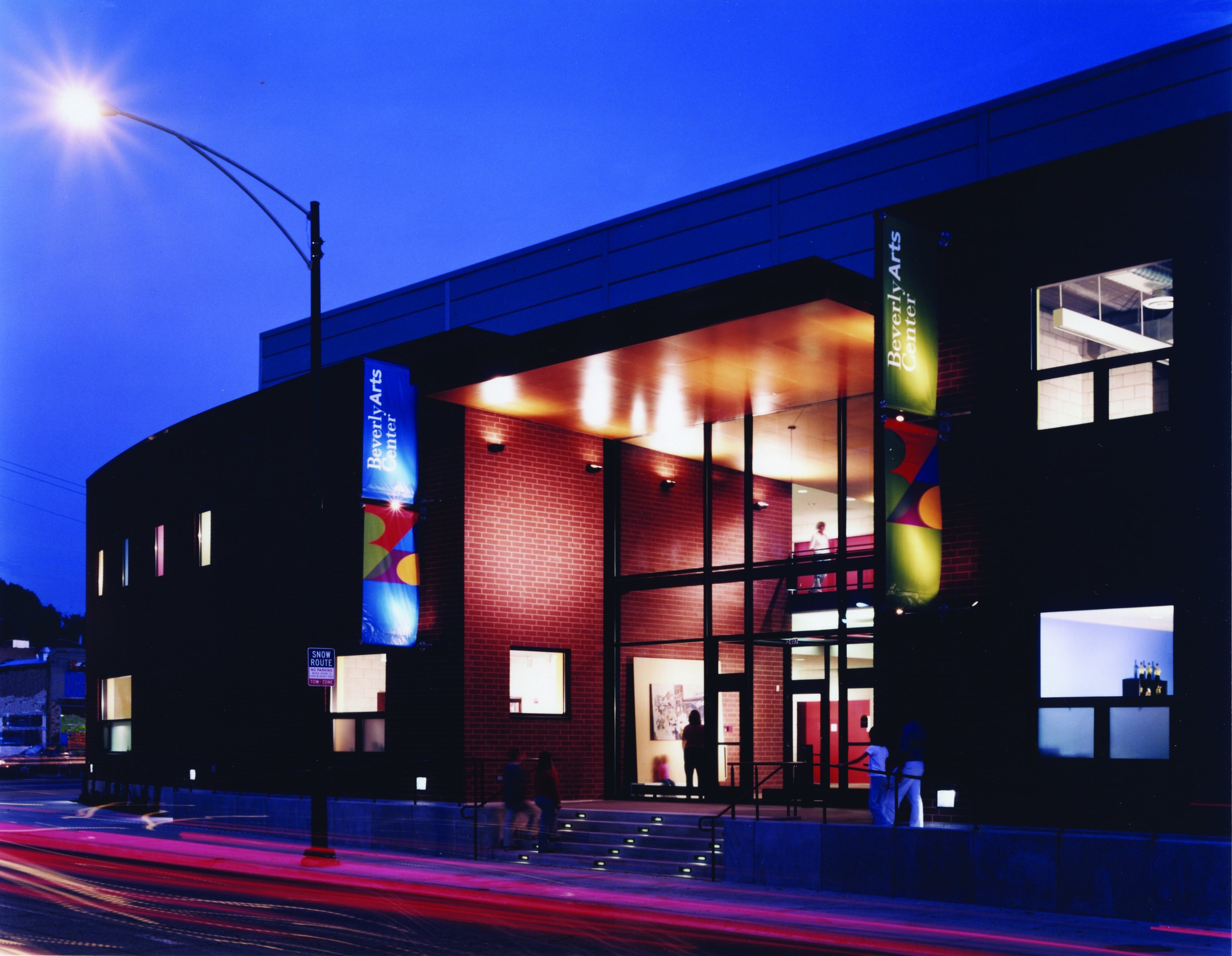
The Beverly Arts Center, founded in 1967, serves the local community as a multifaceted organization hosting a wide variety of events in the fine arts year-round. It provides locals of all ages with programming, such as performances and classes, focused on theater, dance, music, film, and visual arts in an effort to build community by increasing access to the arts. It is the only multidisciplinary arts center in the South Side and serves over fifty thousand visitors every year.
While it often focuses on performing arts, the Beverly Arts Center has a number of events relating to literature, including poetry masterclasses with Chicago poet laureate avery r. young. The Beverly Arts Center also hosted the Frunchroom, a storytelling series presented in partnership with the Beverly Area Arts Alliance, from 2017 to its final event last year in September, 2025. Frunchroom was a quarterly program in which Beverly community members from all walks of life, including Joe Meno, Adrian Matejka, Sahar Mustafah, and Jamal Cole, would gather to present stories of the South Side; by highlighting local accounts, Frunchroom aimed to uplift the diversity of firsthand experience in the far South Side of Chicago, often missing from other Chicago live-literature events or news coverage of the area. In the words of founder and host Scott Smith, Frunchroom was meant “to show people all the different parts of the South Side, what it really is beyond what they may have heard in headlines or on television news.”
The youth poetry festival Rooted & Radical, formerly known as Louder Than A Bomb, has been hosted at the Beverly Arts Center as well. The six-week long annual festival offers hundreds of young poets invaluable opportunities to hone their craft among peers through open-mics, workshops, and performances. In recent years, the festival has been reimagined to focus on building a supportive community and uplifting the voices of the next generation of Chicago poets.
The Beverly Arts Center technically is in the Morgan Park neighborhood, though very close to the Beverly border. David Daruszka, writing in the September 19, 2017 edition of South Side Weekly, noted, “An ancient glacial ridge runs along the length of the appropriately named Longwood Drive, topped by magnificent homes. Morgan Park, named after early estate holder Englishman Thomas Morgan, was a village in its own right until its annexation to the city in 1914. Beverly Hills, named not after the Los Angeles neighborhood but the town of Beverly in Massachusetts, became part of Chicago in 1890. Both communities owe their growth to the Rock Island Railroad, and the branch line that is today part of Metra’s Rock Island District. Historic train stations, part of a Chicago landmark district, anchor the small business districts that developed around them.” The huge prehistoric glacial formation marks Chicago’s highest point of elevation, a nearly 100-foot-tall hill extending roughly from 87th Street to 125th Street.
Eric Charles May fictionizes the neighborhood as “Parkland” in his novel Bedrock Faith. In a conversation with Chloe Meltzer in Allium, a Journal of Poetry & Prose on May 1, 2026, May says, “Because of its location on one of the southernmost edges of the city, Morgan Park has a definite small-town feel. The part of Morgan Park where I lived has been a Black community since the land was prairie. The church out there that my grandmothers attended was founded in the 1880s. The church my family attended was founded in the 1890s.”