Al Capone Home

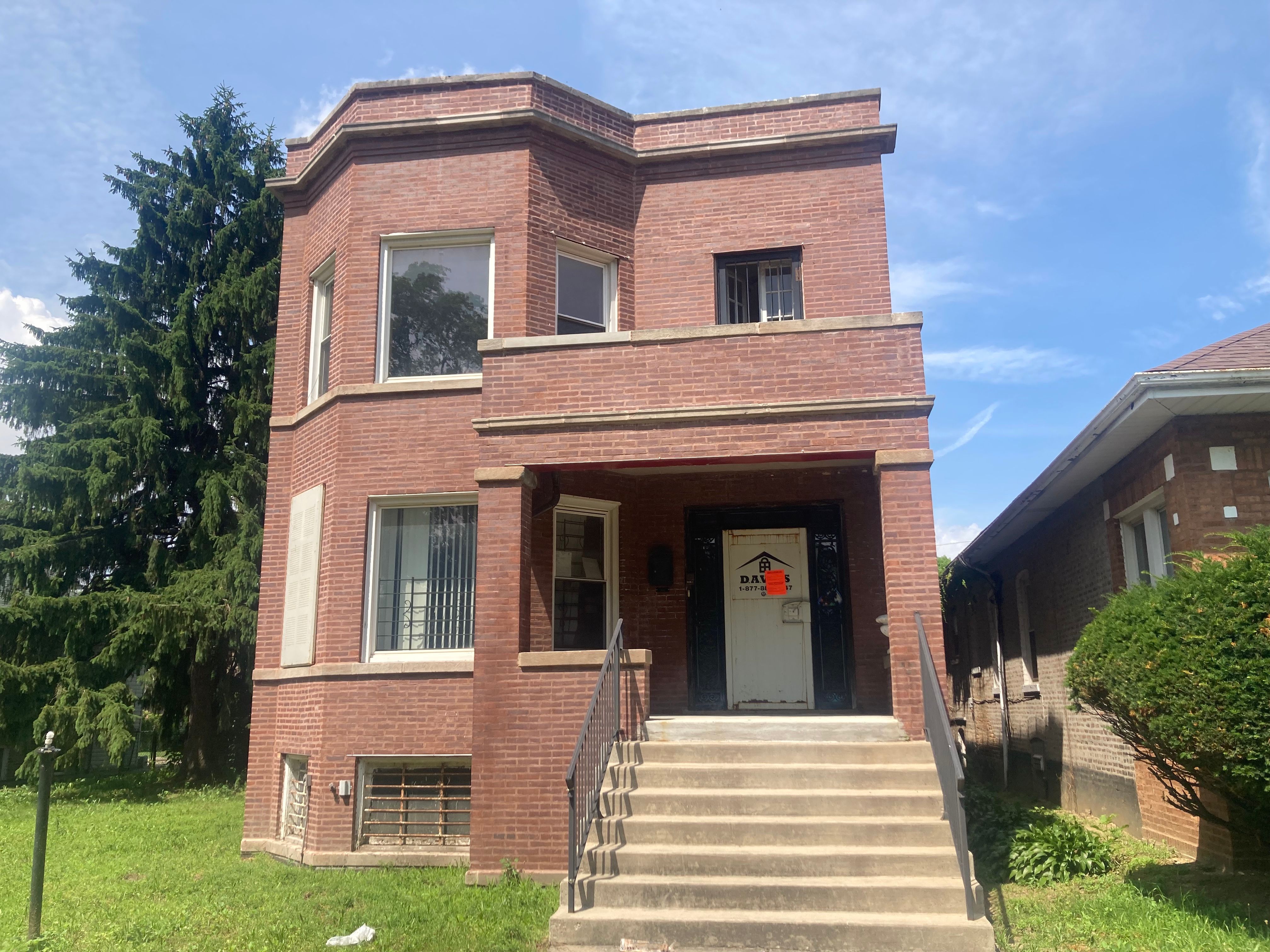
7244 S. Prairie Avenue
Chicago, IL 60619
(Park Manor)
In their several moves throughout Brooklyn, they always lived on the fringe of an Italian enclave, but in Chicago Al moved them into a quiet middle-class neighborhood. They were the only Italians on the street where their neighbors were mostly upper-working-class families of Irish and German origin. Most of the residents owned their houses, and census records revealed that the street was home to a Scot who was a Presbyterian minister and quite a few policemen, which added a touch of irony to Al Capone’s choice of where to place those he loved most.
As the years in Chicago passed, Al Capone became flamboyant in every other aspect of his life, but where housing was concerned he remained low-key and discreet. He never thought of moving to the fashionable sections of the city or building a showy estate; 7244 Prairie was his first and only home in Chicago.
Deidre Bair’s Al Capone: His life, Legacy, and Legend.
According to a 2019 Chicago Tribune article reporting the sale of this home, writer Bob Goldsborough noted that “Capone moved into [this] two-flat with his mother and sister in 1923 after moving to Chicago from New York. Although Capone's name was never actually on the purchase deed, his mother's and wife’s names were on it, and the family owned the two-flat until the 1950s, when [Capone’s] mother died. After Capone got out of prison in 1939, he lived in Florida until his death in 1947. Built about 1909, the two-flat, which sits on an extra-wide lot, has had several owners since the Capones, and in 1989, the Commission on Chicago Landmarks and the Illinois Historic Sites Advisory Council both rejected bids to make the house an official landmark.”
Author Jonathan Eig details the home’s history, vis-à-vis the Capones, in his definitive biography of the Chicago gangster. He writes that Capone desired an immigrant neighborhood in which the family could blend. At the time he purchased the modest home, Capone did not yet possess immense wealth. The home cost $5,500, the equivalent of around $108,000 today. Bair writes in her biography that each floor contained a three-bedroom apartment with a full bath, kitchen and living and dining rooms.
Capone, along with wife Mae, mother Theresa, and the Capones’ only son, Sonny, constituted the primary residents. But the layout also accommodated Al’s extended family—at one time or another, four of Al’s brothers and two of his sisters lived there. This included Frank, who was laid to rest in the Prairie Avenue home after he was shot to death by Chicago police detectives in April of 1924. Eig also details the extravagance of the arrangements, estimating that $20,000 worth of flowers, delivered by multiple trucks, filled the house and subsequently many of the 150 cars in the procession to Mt. Carmel Cemetery in west suburban Hillside, Illinois; the scent of roses and lilies wafted all down Prairie Avenue. Gradually thereafter, Capone installed security measures in and around the home, including window bars, bricked windows, reinforced entryways, armed guards, and, according to legend, an escape tunnel. The basement was equipped with beds where Capone’s workers and extended family frequently stayed.