The Last Catholic in America (and Subsequent Sequels)
Thursday, September 3, 2026
By Analise Budziak
In 1981, author John R. Powers recounted a childhood memory to Chicago Tribune reporter Clifford Terry: “When I was in third grade, a nun walked up behind me and caught me making a sarcastic remark to a fellow student. She slapped me on the back of the head and said, ‘Mr. Powers, if I were you, I’d spend more time with your books because you are never going to make a living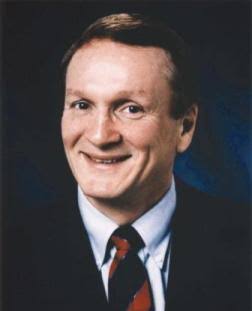 with that smart mouth of yours.’ Of course, she was wrong. I make a very nice living with it.”
Indeed, Powers, who died in 2013 at the age of 67, become renowned for his way with words, between his careers as a memoirist, playwright, and motivational speaker. Published in 1973, The Last Catholic in America was Powers’ first novel and the first of three memoirs about growing up Catholic in the 50s on Chicago’s South Side—a narrow demographic that nonetheless resonated widely. Powers’ books are most often recommended to others who grew up in his era of strict Catholicism and went to schools run by sadistic nuns, and yet I was struck by how smoothly Powers could immerse the reader in the mind of a child. I’m barely twenty-one years old and I often still feel like a kid; I didn’t realize how much I’d grown up until Powers made me see the world through the eyes of an elementary schooler again. Every small thing feels immense through a child’s eyes, and Powers captures that perspective throughout the book and makes it feel as natural as breathing, weilding his words to bring to life the panic over the supposedly mortal sin of stealing a single dollar or the naive optimism about the outcome of a baseball game.
The Last Catholic in America draws the reader into the world of Eddie Ryan, as he attends grades one through eight at St. 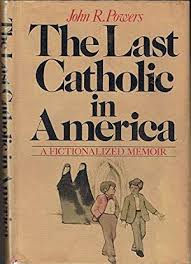 Bastion’s Parish in Seven Holy Tombs. Eddie is a stand-in for Powers himself, just as St. Bastion’s is a stand-in for St. Christina Roman Catholic Church and Seven Holy Tombs a stand-in for Mount Greenwood. Powers’ second and most popular book, Do Black Patent Leather Shoes Really Reflect Up?, follows Eddie to high school, and the third book completing the Catholic fictionalized memoir set, The Unoriginal Sinner and the Ice Cream God, explores later adult life; Unoriginal Sinner’s protagonist is not named Eddie Ryan, but readers easily caught on that the main character was still a stand-in for Powers and thus the three are considered a trilogy. In Powers’ words, the name change “fooled no one.”
The fictionalized memoir consists of a series of vignettes, with each chapter focusing on a different aspect of Powers’ childhood. While many of them highlight the rites of passage marking a Catholic childhood, such as first Confession and Lent, others go beyond the church and neighborhood, like when Eddie’s grandfather takes him to a baseball game.
Powers’ books were bestsellers on release, but critics and reviewers have had mixed opinions both then and now. A major point of contention is Powers’ “nostalgist” label; some critics call Powers a one-trick-pony, relying on his wit too much and turning a promising premise into a shallow comedy. Kirkus Reviews was particularly scathing, calling the novel “a lumbering attempt at satirizing a priest-ridden Catholic childhood. Powers, alias Eddie Ryan, recalls his life and hard times as a fledgling Catholic…with the condescending disdain of one who has since attained secular enlightenment. …the humor is cheap and obvious and more depressing than funny.”
In a dramatic contrast, novelist William Brashler lauded Powers’ writing in a review of his second novel, Patent Leather Shoes, in a 1975 article for the Daily News. He wrote: “I think he is good enough, controlled enough, the master of his fictional voice so that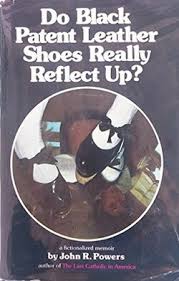 he could have put together his own ‘Catcher in the Rye’ or ‘Confessions of a Spent Youth.’ There are many scenes in ‘Patent Leather Shoes’ that prove it. They are often touching, insightful, and damn memorable, and they give the book its breadth when the one-liners run out. In writing these as well as he does, Powers signals that he may be ready to finish off his entertaining trysts with his past in favor of a full-blown treatment of the present. Here’s one reader who’s waiting for it.” The Book-of-the-Month Club found it praiseworthy as well: “[Powers] has recaptured childish innocence and presented it with adult enlightenment—plus a touch of cynicism—yet never with irreverence.”
The mixed readings of Last Catholic persist to this day, evident from a glance at its Goodreads page. Many reviewers praise Powers for using heartwarming humor to transport them into vivid memories. On the other hand, quite a few readers didn’t appreciate its balance between fondness and cynicism; some wish it was more scathing and critical of the church, while others berate the book’s comedic nostalgia label in light of its often bittersweet reflections.
I believe this discrepancy is a matter of expectations and perspective; people who read Last Catholic for only the humor are caught off-guard by its sharp edges, and people expecting a hostile recounting of 1950s Catholicism find its depth wanting. The Boston Globe’s 2002 expose of priest abuse in the church has drastically shifted public perception of Catholicism. Powers evidently didn’t know about these scandals when he wrote Last Catholic in 1973, but modern readers no doubt have it on their minds when it comes to any discussion of the institution of Catholicism. While a worthwhile topic, church abuse is beyond the scope of Powers’ decades-old nostalgia-focused memoirs.
Beyond that, what many critics seem to overlook is that nostalgia is inherently bittersweet. Nostalgia is a recollection of an innocence that can never be recovered, an innocence that one may not want to return to anyway. Childhood only happens once, and by the time one can look back on it and write memoirs about it, it’s over and done with. Nostalgia is, in a way, a grieving process. Powers expertly navigates the fine line between comedy and tragedy in his writings, balancing the voice of Eddie as a child and as an adult looking back, and the result is a deeply resonant story that is often as sad as it is sweet.
Despite often-harsh critics, Powers’ works have withstood the test of time with incredible success among the general public. The Daily News listed The Last Catholic in America among other bestsellers in April 1973, and readers can be found discussing it online despite now being more than fifty years removed from its initial publication. One writer for the Georgia Bulletin recalled Powers’ stories when he stumbled across a school Mass and, while there are marked differences between the church of Powers’ childhood and modern Catholicism, was “pleased to see that not everything has changed since Powers’ day!” He went on to write, “If you are a Catholic who was educated in the Church prior to Vatican II, you must read this book. If you are a post-conciliar Catholic, you should read this book as a funny and poignant reminder of our collective past.”
Powers’ memoirs were even adapted into a musical, with music and lyrics by James Quinn and Alaric Jans and the book by Powers himself. The musical, titled after Powers’ second book, Do Black Patent Leather Shoes Really Reflect Up?, premiered in 1979 at the Forum Theater in Chicago. The story covers elementary through high school, or Powers’ first two books. It set records for the longest theatrical production in Chicago with an incredible four and a half consecutive years run. It was a huge commercial success and is revived in local theaters and schools to this day. The musical had an impact on Powers’ personal life as well; he met his wife, JaNelle Meyers Powers, when she was acting in the original production, and later, Powers’ elder daughter, actress Jacey Powers, performed in it herself.
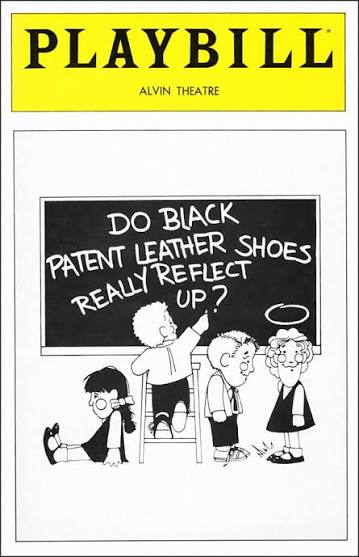 Patent Leather Shoes even made it to Broadway, opening on May 27, 1982 at the Alvin Theatre. However, it did not find the same success in New York City as it did in Chicago. It closed after only five performances. The Tribune wrote, “Powers, who was known for his quips and perennial sense of fun, saw the New York failure of the show as a consequence of its sweetness and his determination to tell the story of grade school through a child’s eyes. ‘The critics were expecting a biting, anti-Catholic satire, and when they didn’t see it, they let us have it.’” Even so, Patent Leather Shoes has found enduring success as a musical in the Midwest, if not on the Great White Way.
Powers was a regular of the theater world. He wrote one-man shows, including Paper, Scissors, Rock, and was even writing one at the time of his death in 2013. He wrote for television programs as well; he won two Emmy Awards for writing on the shows Lovers and Lanes and Going Home in 1984 and 1988 respectively.
His love for theater did not feature in The Last Catholic in America; rather, that memoir told of childhood crushes, baseball games, and roller skating when it ventured beyond the church walls. From the elation of eighth grade to mishaps in mass, Powers puts the reader in the mind of his childhood self with the deft deployment of details. He immerses you in his world of the church, the local community, and Chicago. As many readers say: those raised Catholic in the 50s should read The Last Catholic in America for the familiarity of Powers’ world, and everyone else should read it to get to meet Powers’ world for the first time.
Copies of Powers’ books can be difficult to come by, but some can be found affordably. The Internet Archive has a digital version of The Last Catholic in America. It’s also available used on AbeBooks for quite cheap, though new copies are often pricey.
Analise Budziak is an undergraduate English and Creative Writing major at St. Olaf College in Minnesota and a summer intern with the Chicago Literary Hall of Fame. They won the CLHOF's Randall Albers Young Writers Award in 2023. They study all forms of writing and storytelling, but their dream is to become a fantasy author. When they aren’t writing, they enjoy geocaching, making music, and petting every dog they see.


 Back to Blog