Robert Loerzel: The Coolest Writer on Chicago
Friday, October 16, 2026
by Donald G. Evans
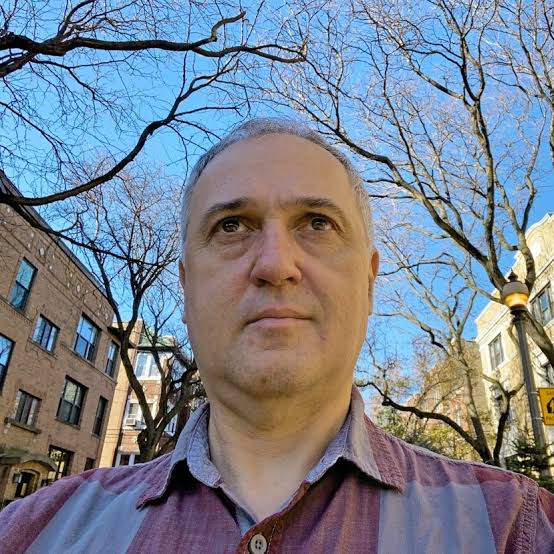 Robert Loerzel’s ascent to the ranks of Chicago’s best historians and journalists, especially regarding the Uptown neighborhood, happened for the usual, easily understandable, reason: cheap rent. He was born in Alaska, then moved to Illinois when he was nine. He studied journalism, and some history, at the University of Illinois, then after graduation bounced different around to different parts of the Chicago area, including some of the suburbs and the Irving Park neighborhood. Robert’s younger brother, Richard, preceded him as an Uptown resident, and volunteered his help in finding local accommodations. That was twenty years ago.
What attracted Robert to Uptown, other than budgetary considerations, were the stories. Robert worked 17 years at suburban weekly chain Pioneer Press, during which time he formed the habit of researching old newspaper stories about historical events in places like Arlington Heights and Palatine. He unearthed “little stories that you don’t find in the big history books.” That led to Robert’s first book, Alchemy of Bones: Chicago's Luetgert Murder Case of 1897, published in 2003 by the University of Illinois Press. In concert with his relocation to Chicago, around 2006, Robert was transitioning to full-time freelance work, meaning he needed to come up with ideas to pitch editors. The Uptown neighborhood offered a treasure trove of fascinating stories steeped in history. For the last five years, Robert’s freelance writing has largely centered on the neighborhood—its history, its institutions, its people.
When the Chicago Literary Hall of Fame led an Uptown Literary Walking Tour last summer, Robert leveraged his vast knowledge of the neighborhood’s history to help us research and write narratives about literary connections. He also served as a docent. Robert’s stories, mostly from memory, provided deep insight into how particular places inspired or enabled or produced worthwhile authors and books. As we walked the streets that day, Robert constantly ran into neighborhood people with whom he had a relationship—many, like Robert, devoted much time and energy into the documentation and improvement of Uptown.
DGE: The Uptown: Chicago’s Endangered Movie Palace. It’s an extraordinary book. I guess you would call it a coffee table book because it's oversized and it's lavishly illustrated, mostly with photographs but also maps and diagrams. City Files Press is the publisher. I know a little bit about other publication they've done—Lost in America, in which Richard Cahan and Michael Williams document important demolished homes; the Vivian Maier and Edgar Miller picture books--and it seems like the exact right fit for your book. Could you have done this book like you did it if you had another publisher?
RL: That would have been challenging. This book sprung out of a different project that I did. I wrote what is basically a book, but it's not published as a book, called The Coolest Spot in Chicago. I was writing a history of the Green Mill and the Uptown neighborhood, and putting it online, basically chapter by chapter, kind of serializing it. Andy Pierce got in touch with me, and said he saw that I was doing some stuff related to the Uptown Theatre. That's really his focus: pushing the Uptown Theatre. He and I started talking—this was about a year before the 100th anniversary. We really didn't have that much time to put the book together. City Files Press was interested. We met with Rich Cahan and Michael Williams. It's basically a two-man operation. The two of them run this boutique book company. If this were a university press…university presses have a whole process where they have to have the manuscript reviewed by experts, which I think that's a good process--except it takes a long time. I can imagine that if we if we went to the University of Chicago Press or someplace like that, it probably would have taken an extra couple of years to get the book out, which would have missed the 100th anniversary that we were trying to get it published by.
DGE: Artwork and photography are so critical to City Files Press projects, as it is for your book. I would imagine another publisher, with different sensibilities, would have cut quite a lot of it just based on cost, right?
RL: Right. I don't know all the details of the finances, but City Files Press got a grant from the Driehaus Foundation to help subsidize publishing this book,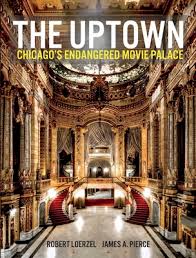 and Andy and I are really not getting paid very much, other than we get copies of the book to sell. Andy raised some money through donations to pay me, so it's kind of a charity project in a lot of ways. If you did the math for what it's going to cost to print this book, you probably would think, “Forget it.” So it's the kind of project where the publisher and the authors had to care that we want this book to come out. Right now, the book is basically sold out, and it's not that practical to crank out another 500 copies of it. I don't know that that's going to happen.
DGE: We have the same dilemma with the Chicago poetry anthology. We're basically sold out, and we should print more. But when we sell them in the store, we lose money. By the time we pay for the printing, and everything else, then the bookstore takes their 40 percent discount…there’s less than zero left over.
RL: With this book, my initial thought was $50. That's pricey. Who’s gonna buy it? But obviously there were enough people to buy it that that price worked. It’s got a lot of pictures and it's a coffee table book, so for something like that, maybe they're willing to plop down the money. I would hesitate myself.
DGE: August 17th and 18th, 1925. The Uptown is being built in in what you term the golden age of the movie palace.
RL: Yes.
DGE: What is meant by that term, “movie palace”? Get us grounded. How does that apply to the Uptown?
RL: There are some debates about what exactly defines a movie palace, but essentially it's a very large and very ornate theater for showing movies. They were really only built for about a decade or so in this era of the 1920s and early 30s, when a lot of people were going to movies. The average American was buying movie tickets at a rate that was something like 16 times what it is today, and so the idea of building a movie palace that has 4300 seats, like the Uptown, did not seem so crazy then as it would today. Because if you built a theater that big today, expecting people to go see a movie and fill the theater-I mean, maybe one or two screenings of The Odyssey in IMAX would bring out 4300 people. But even that, it's like, man, you're really pushing your luck to think that you're going to get that many people at a movie. Maybe if the star is there or something, a special event. But back then, you actually could fill a theater that big. One of the things that's remarkable about The Uptown’s design is that 4300 people could be sitting watching a movie and the show, and they had space in the lobbies for another few thousand people who would be waiting to get into the theater for the next show, and it was designed so that the crowd would leave the building as they're leaving the show. They would go out on the sides, and the people coming in to see a show would be coming on Broadway, so the two crowds would not cross paths in between the movies, and they could empty out 4000 people, and bring in a new crowd of 4000 people within about 15 minutes. Great traffic flow engineering, but that's part of the reason why this building is so huge. Not only do you have the auditorium itself, but you've got these vast lobbies that could hold big crowds of people. The Balaban and Katz movie company—the movie theater company that owned this theater--used the architects Cornelius and George Leslie Rapp, two brothers from Carbondale, Illinois, and they really had this philosophy of designing theaters that felt like a castle or a European palace, and so that people of all economic strata would pay the same price for a ticket to sit anywhere in the theater. They wanted someone who was a working-class person, maybe a bus driver or a cop, to walk up to the Uptown Theater, buy a fairly cheap movie ticket, and walk into this place that made them feel like royalty. It was this idea of an escape, and we still have things like that today--Disney World and different amusement parks, and in the last 10 years or so, you've had these immersion experiences where you might go into some building that's got a virtual reality escape into the world of Harry Potter or whatever. This was sort of the 1920s equivalent of that, and they had a lot of art in the building, paintings and sculptures and just fancy decor, where they encourage the ushers to let people linger in the lobby, so you wouldn't necessarily rush right in to see the movie. You would come into the building and just kind of look around and hang out and look at all the fancy stuff for a while before you went in to see the show.
DGE: You wrote in the book that some people would come as much or more to visit the movie theater as they did to see the actual show.
RL: Yes, the building itself was a big attraction.
DGE: In your research, you rely on historical newspaper accounts, public documents, photos, interviews. What you're really doing in the narrative, you're telling the story of the theater, but you're recreating a whole era. You do such an extraordinary job of it. How do you get your reader down to that ground level of 1925 or 1942 or 1970, so that they can appreciate the context and envision the culture that surrounds the story?
RL: You can't always find a newspaper story that tells the story exactly the way you want it to. There are a lot perfunctory articles. There'll be some blurb that runs in the paper saying such and such a theater is opening this week, or what movie's playing there. What I'm really looking for are those little nuggets where someone actually describes the experience of being in the theater. Luckily, there were some of those from the grand opening, but then years go by and it's like, “Okay, I can't find anything from the late '30s.” You might find, “Oh here's a story from the '40s” or “Here's a story from the '50s.” Just kind of looking. When you search online, something like Newspapers.com is a good resource. But it isn't always easy. What exactly are you going to search for? Which search term will lead you to that article? I'll find like 600 stories about the Uptown Theater. But which of these really tell you something about what the theater was like? I like the story about a guy who ran the projector for this downtown screening room where all the critics would go. He talked about how he liked going to the Uptown Theater and how when he was there he would hear the way the audience of everyday Chicagoans reacted to the movie in ways that he did not experience when he was sitting with a few critics at the screenings downtown. I thought that was a great little anecdote, but I had to sift through hundreds of stories to find that one.
DGE: You use archival collections to find old newspapers?
RL: Yes; I enjoy using them. On the one hand, it's nice when an old newspaper story is scanned, and it's part of a database that you can just search through. That makes it way easier. There are some things that you would never find unless you spent years scrolling through microfilm or whatever, but it's also kind of nice to find something at an archive where I'm flipping through pages, and I know that no one else is going to find this by looking online. I've got an actual physical document I can look at, and I'm the only person. Well, someone else might go to the museum, Chicago History Museum, or wherever, and look at the archive. But it takes some work to get to that actual piece of paper and see it, and that's kind of fun.
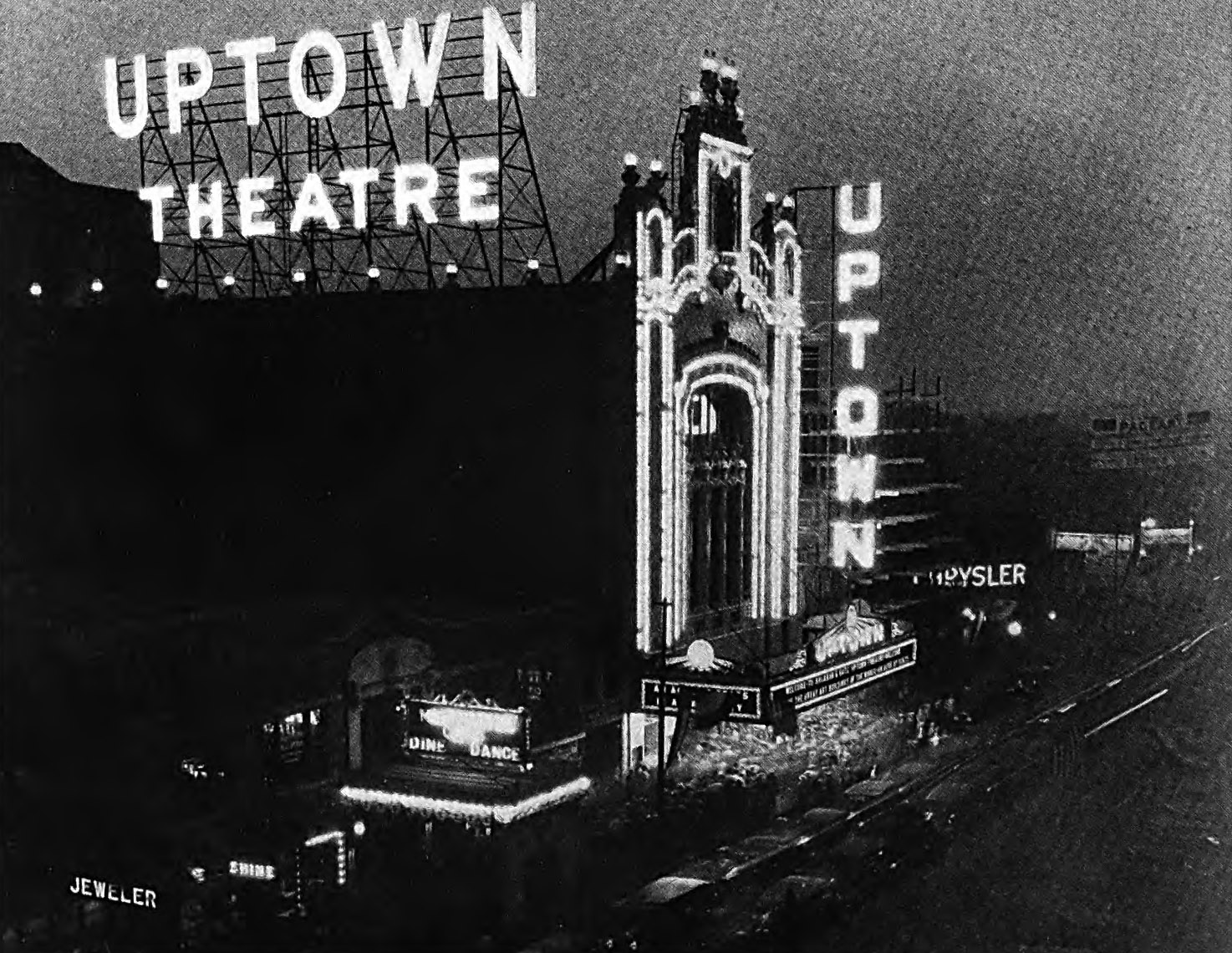 DGE: Broadway and Lawrence are ground zero of the history of the theater. One of the things I loved about what you brought to the Uptown Tour was the way you were able to connect generations of Chicagoans through some of the spots they went to. How did you use that intersection to do that? It seemed to me like some of the writing you did was really about what life was like over the decades, and that was really the hub, right?
RL: If you go way back in the history, there was a roadhouse there that was what essentially became the Green Mill. If you go back to when that roadhouse was first being built, you know you've got this guy Pop Morse who, for some reason, decides to buy this lot, this property, at the corner of Broadway. At the time he brought this property, Broadway was called Evanston Avenue. and there was nothing there. This whole area was basically farms and countryside, virtually no houses even around there. This is in the early 1890s. I don't know if he just was lucky or if he had some foresight that this could be a hot spot in the future. In 1897, he builds a roadhouse there, which became a spot where people driving their horse-drawn carriages up to funerals and burials up in the cemetery in Evanston would stop and have some corned beef and cabbage. It became famous for that, but then as time goes on, the elevated trains are extended to Wilson Avenue, which is pretty close, and that brings in whole crowds of people. And then the neighborhood right around it just booms in the first couple decades of the 20th century, Suddenly, this spot that was in the middle of nowhere becomes the hub of entertainment for the North Side, with jazz clubs and movie theaters and restaurants all popping up right around there. As you move through time after the Uptown Theater, into the Depression and World War II, the neighborhood sort of goes into economic decline, but it becomes a magnet for people moving into Chicago and looking for a cheap place to live, including a lot of white Appalachian immigrants who are coming from poor places in in the mountains of Appalachia. They're moving to Chicago to get jobs in factories. This is a neighborhood where they can afford to live, so it becomes known as a Hillbilly Heaven. They face all kinds of discrimination, and then as time goes on, people of other ethnic and racial groups move in, and it becomes a very eclectic neighborhood in terms of the people living here. And through all that, it is still an entertainment hub because the movie theaters and the concert venues persist. People still come to Uptown to see movies, even though if you're just kind of looking at the demographics, you might think like, “Oh, some people will probably think that's a scary neighborhood now.” By the 1970s, somehow it becomes a place where people are going to see rock concerts. And then in the years since then, the neighborhood gradually gentrified, but it's still, I would say, a kind of a funky neighborhood with a lot of little weird things in it, which I appreciate.
DGE: Pop Morris's Roadhouse reminds me of how difficult it is to pin down truth or what can be accepted as the closest version of the truth. We went through this when you were helping research and write some of the narratives for The Uptown Literary Walking Tour. One of them was the Green Mill. There are all these legends about that roadhouse that you kept coming back to us and saying, "Well, that's not true?” or “That's unconfirmed.” How do you get to that point where you feel like that's the definitive story?
RL: That took a lot of work. I wrote [about the Green Mill on my website], and I called it The Coolest Spot in Chicago: A History of Green Mill Gardens and the Beginnings of Uptown. It ended up being 44 chapters, and I think it's like 330,000 words; that would be like an 1100-page book if you printed it. A lot of it has to do with this question of, “What's the myth, and what can we actually prove happened?” Over and over again, you see stories saying that The Green Mill originally opened in 1907, and it did not open in 1907. From what I can tell, the guy who owned the Green Mill back in the 70s and 80s said that repeatedly, and newspaper reporters heard him saying it and printed it. He himself probably didn't know exactly when it opened. That was something he had heard. So we're getting second or third hand information, and it was harder for reporters at that time to look up old information. No one was fact checking what he said, and this information just gets repeated over and over again. The next thing you know…if you look on Wikipedia, that's what it says there. People take it as an established fact. I looked at not only newspaper stories, but property records and court documents and photographs of the building and things like that, and looking through all of that, you can piece together a pretty accurate history. But there are still gaps in it. I had not been able to find a photo of the original Green Mill building from what it looked like when it originally opened. I have drawings of it from advertisements, and I am absolutely certain people took photos of it, but where are the photos?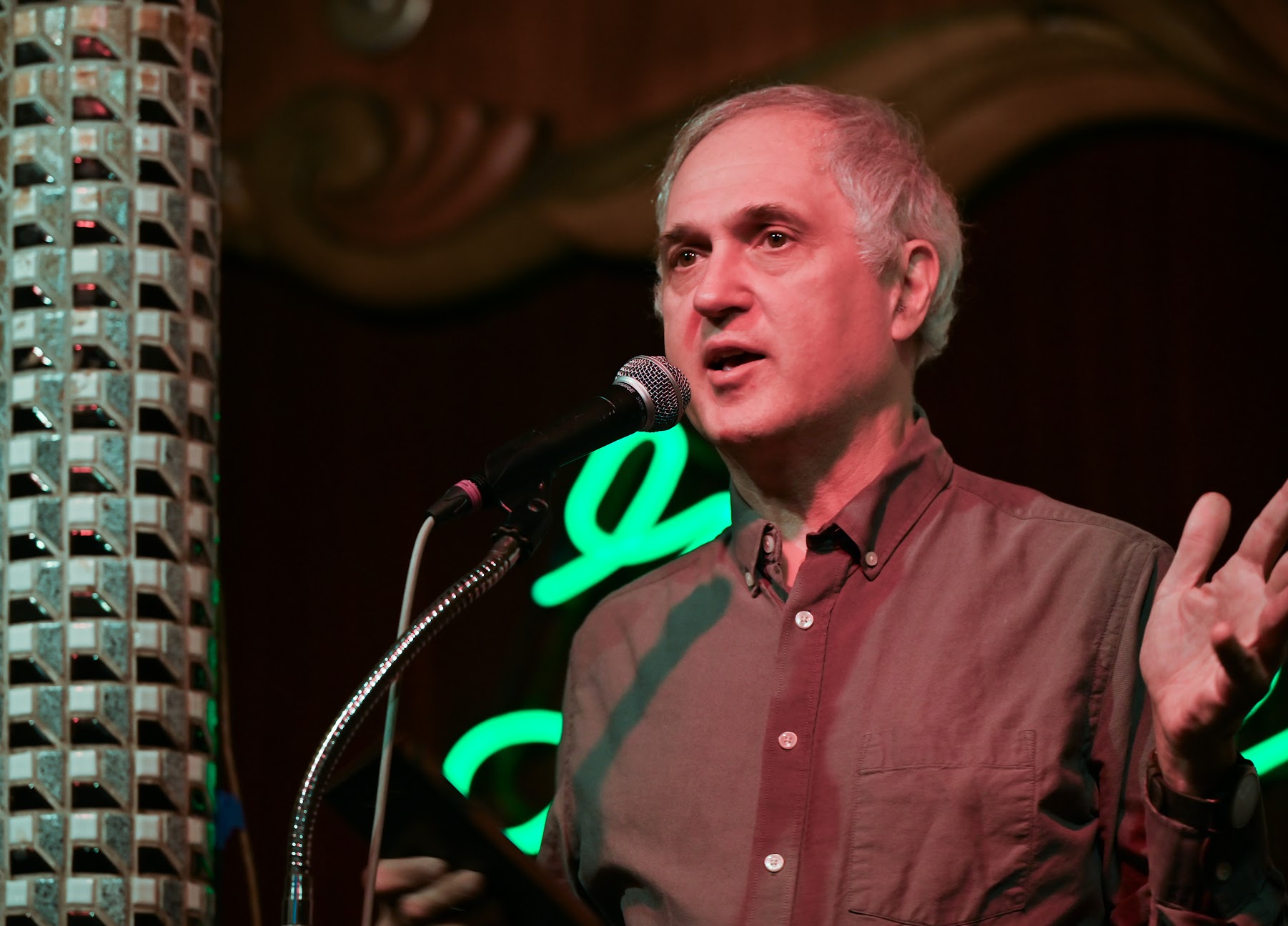
DGE: Part of what we do with the literary tours, we organize them around a neighborhood. Usually. The Uptown tour was organized around the Uptown neighborhood. Part of that is just practical because we can only walk so far. But that's also the purpose of Chapter Two of the Uptown book, to give kind of a summary of the neighborhood and its history.
RL: Exactly.
DGE: What has been the evolution of Uptown from then to now?
RL: Well, if you look at it in 1920 and 1930, in that era, I did this deep dive looking at the census records from 1920. I went on Ancestry.com and looked at these hundreds of pages, put it together in a giant spreadsheet to figure out like, “Okay, what was this neighborhood like?” and I noticed that Uptown had a predominantly female population. I was like 52, 53 percent female. If you've got a group of 20 people, 11 of them are girls or women. That's not what it's like in the rest of the city. The rest of the city is basically 50/50. So, what's going on there? And you'll see, there's a lot of young couples that don't have children. There's a lot of single people who have moved to Uptown from different parts of Chicago, or they came here from like Iowa or Wisconsin or something like that, living in apartments by themselves or with roommates, and this might not sound unusual to us today, but in 1920, no one had ever seen a neighborhood like this before. It was the equivalent of neighborhoods today like Wicker Park or Logan Square. There was a conservative element in Chicago, sociologists and religious clergy who would look at Uptown and say that it seems like a sinful place. A lot of people there are getting divorced, and we really want young people to get married and have children and live in a single-family home and have a yard, instead of Uptown where these young people are moving there, and what are they doing? They're going out at night and seeing concerts and plays and movies and dancing and doing all this stuff instead of starting a family. There was a lot of hue and cry about that. It’s hard to tell when you look back at a lot of this stuff in newspapers. When people are complaining about women walking the streets, are they actually talking about prostitutes? In some cases, maybe, but it also could just be a young woman from the flapper era who has decided that she doesn't want to just instantly go into her marriage. She wants to have some fun and hang out with people. By today's standards, these people would not be considered sinful or suspicious. But in the early 1920s, it did seem suspicious to certain people.
DGE: When Ben Hecht wrote about it, his character was a prostitute, wasn’t she?
RL: He wrote this great story called “Nirvana,” where he describes a journalist, probably himself--it's lightly fictionalized sort of writing that he did--and he describes picking up this young woman on Sheridan Road, and they go out dancing. The implication is that this is a loose young woman, but, again, he’s not really coming out and saying exactly what's going on here. There’s a lot of gray area between these categories of people. I've also [been interested in] people who lived in neighboring neighborhoods in the 1920s. There's a Chicago Daily News story where they talked to people who lived in Ravenswood and Edgewater, and they asked them, "What do you think about Uptown?” And those people said, "Oh, I love going there for a night out, but I'm glad I don't live in this kind of noisy neighborhood where everything's excitement all the time, and I'm glad I live in a quieter neighborhood next door.” I think you still have that kind of divide today, that some people want to live in the exciting neighborhood where they're surrounded by a million restaurants and everything, and other people would rather be off in a quiet street where they don't hear all that stuff all the time.
DGE: It's also affordable. That’s partly why so many social service agencies descended upon Uptown and how it became populated with a lot of mentally unhealthy people. Zak Mucha writes a really great memoir about his time working as a social worker in Uptown, Swimming to the Horizon. Even today, Uptown remains relatively affordable.
RL: Yes, I find it affordable, but rents are going up, property costs are going up, like they are everywhere. I still find it more affordable than other parts of the city.
DGE: Filmmaking is a kind of storytelling. When we go back to The Uptown’s roots, we're talking about silent film. We're talking about actresses like Virginia Valli, who grew up in Uptown. Who are some of the artists who are part of this storytelling tradition?
RL: One movie that is filmed partly at the Green Mill is Thief by Michael Mann, which is not specifically a movie about Uptown. The Green Mill features prominently in it, and it nicely captures what that space was like when it was filmed--I think the movie came out in 1980, but it might have been filmed 1979. Medium Cool, the 1968 film, which is mostly famous because it it was filmed in the midst of the Democratic National Convention in Chicago. The actors playing characters in the movie are walking in the middle of actual news events as it's being filmed, which is a fascinating kind of hybrid of fiction and documentary. It has a number of scenes filmed in Uptown. One of the characters is a woman with a son--they're from Appalachia, and they're living among other Appalachian immigrants in Uptown, A few years after that movie was made, Truman College was constructed, and so the street where this woman lived in the movie no longer extends where it used to, and the parking garage for Truman College is there. But you can see some of the other buildings nearby. That movie captured what Uptown was like in that era when you had a lot of poor white Appalachians living here alongside African Americans and other people,
SG: Have you ever seen anything being filmed near you?
RL: There was a season of the TV series Fargo that was set in Kansas City in the 1950s, but they filmed most of it in Chicago, including a couple of days at the bank building that's kitty corner from the Green Mill, at the southeast corner of Broadway and Lawrence. They put up different lettering on the sign above the [bank’s] doors to so that it would be the name of this bank in Kansas City that's part of the Fargo series, and they had antique cars from the 1950s with Missouri license plates on them, parked up and down the street there. I did not see when Chris Rock walked into the bank building, but once I saw the TV series, I'm like, “Oh, there he is inside the building.” If I'd been there at the right moment, maybe I would have would have seen Chris Rock. And also, the TV series Shining Girls, with Elizabeth Moss, was filmed inside the Uptown Theatre. When they were working on that, I saw the trailers outside and in the back part of the building, they had all these fake rock concert posters that they put up on the walls. I walked past and I took some pictures of that. I realized the days of the week and the dates didn't line up. There were a couple of TV series or movies that filmed inside the Golden House restaurant, which is near there, a pancake house that I've been in a bunch of times. I remember seeing when that was like closed off. The movie Widows filmed in there; there's a scene where you can see them sitting in the diner. There's one particular booth that I think of as the Viola Davis Booth because that's where she sits in the movie.
DGE: In The Uptown book, you're really illuminating the culture of a time and of this era of movie going that is so different from today. It’s so attractive to me, so fascinating, I love all the little details that fill the narrative, like when you wrote that movie times were rarely announced.
RL: If you look in the ads in the newspapers, at least in the 20s, I think up through the 30s, the ads don't say when the movies start. The idea was that people just show up, and at least during the silent era, they had what they called continuous entertainment. It wasn't just a movie. They would have comedians on stage for seven minutes, and then there's a song and dance show, and then they'll show a cartoon, and then there's a newsreel, and then the organist plays a song, and then the feature film comes on. People might walk in while the movie's already started, and stick around and watch the beginning of it a couple hours later, and then leave in the middle of it, or they might ask the ushers, "Well, when does the next movie start?” and hang out for a while. When you showed up at the theater, you didn't know exactly what was going to be happening at the moment you walked in.
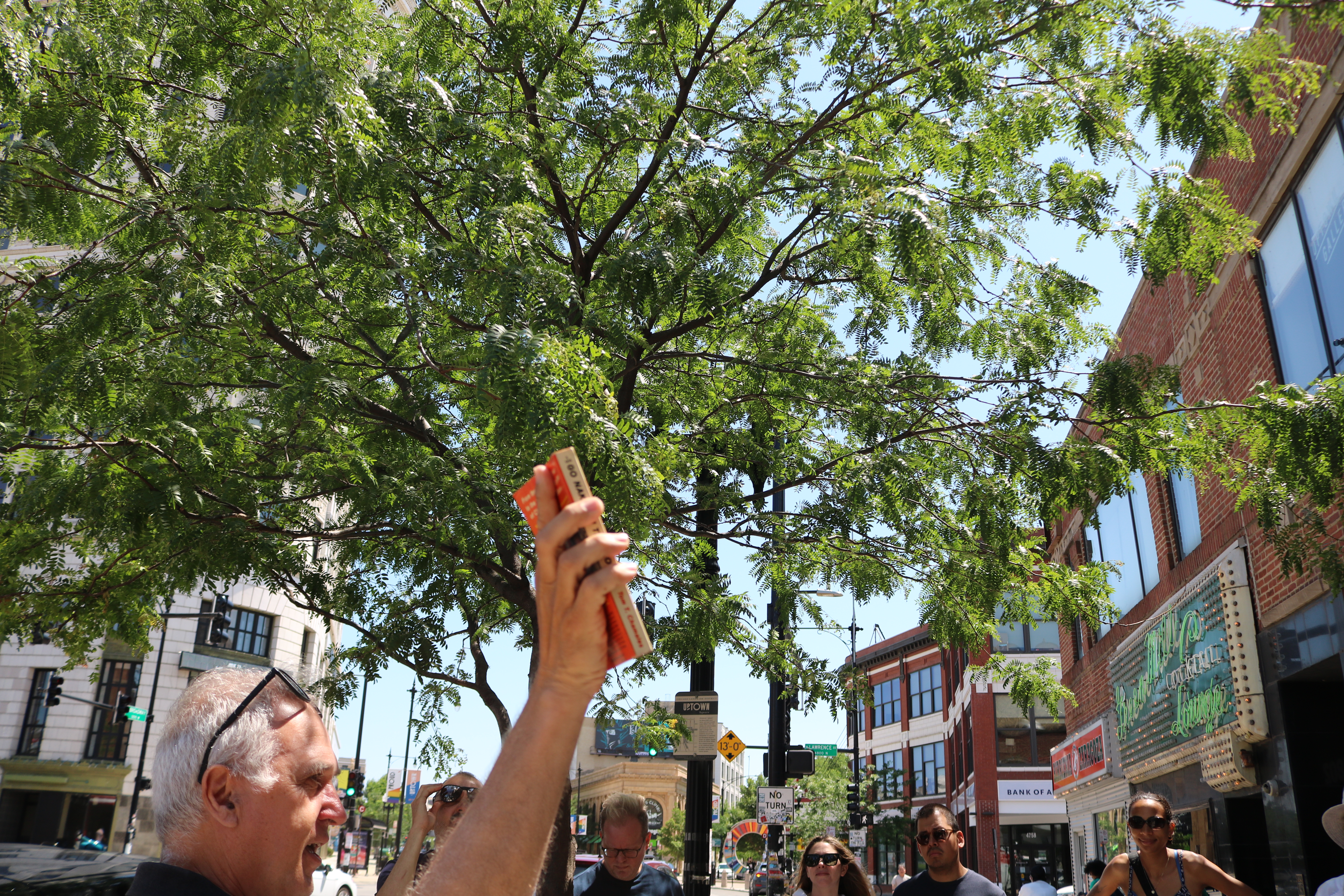 DGE Going back to the Uptown Literary Walking Tour, you did a really nice job when we were at the Green Mill. You found these various literary connections at the Green Mill, both things that were written by people associated with the Green Mill, and with the Green Mills as a setting. Share with us some of the some of those connections that you found with the Green Mill.
RL: Tom Chamales was the owner who founded the original Green Mill Gardens, and his son Tom Chamales Jr. became a best-selling novelist, circa 1950. He was a World War II veteran, probably suffering from post-traumatic stress syndrome. He had aftereffects of being in the war, and some of that informs what he wrote. He wrote two novels, both of which were made into movies, and one of which, Go Naked in the World, includes a fictionalized version of the Green Mill. You’ve got this character whose father owns a nightclub called the Mill, and so, obviously, the father-son relationship in that book must be patterned after Tom Chamales Jr. and his father. That gives us some clues as to what that family history might be like. There's also, one of the most famous stories about the Green Mill became a book and a movie starring Frank Sinatra, about Joe E. Lewis, who was this entertainer who broke his contract with the Green Mill and went to a different nightclub and then got attacked by some mobster goons who sort of left him for dead, cut his throat and his tongue. He survived and made a comeback, and it's this story that becomes the basis of a lot of the legends about the Green Mill, connecting it with Al Capone, which…I don't think Al Capone had much, if any, connection to the Green Mill, but he's become the famous guy that everyone mentions. The Joker Is Wild by Art Cohn is positioned and billed as a nonfiction book. Art Cohn, the writer, was a journalist; I would describe the book as a novelization of the story.
DGE: The Uptown Theatre book also documents preservation efforts—decades and decades of it. The sheer amount of dedication and labor and money required to stave off the wrecking ball is exhausting. I found those stories, and the people behind them, inspiring. I admire those people, including yourself, who care enough about history, and its connection to our contemporary life, to work so hard at such a longshot project.
RL: My coauthor, Andy, wrote about his own volunteer work in the book’s introduction, while also giving credit to the Uptown’s other guardian angels. All of that was inspiring to me, too.
DGE: I like to think that the Chicago Literary Hall of Fame respects and honors our city’s great literary heritage. Too often, authors and books get filed away, seldom to be heard of again. We’re better, all of us, in my opinion, when we preserve and revisit the past. Much of it is as relevant today as it was then. The Uptown book, at its core, and your work as an historian and journalist, share this sensibility. What motivates you, especially when so many people want to blow up the past for a shinier present?
RL: I know it’s a cliché that we can learn from our past, but I strongly believe that’s true. I constantly come across stories from Chicago’s past that are either strikingly similar to recent events or downright strange and unexpected. When it comes to architecture, I do cherish having historic buildings in our midst.
DGE: You knew going into this project that you would not be rewarded financially. I think books like The Uptown are so important, not necessarily at the time of publication but as a standing record. What did you hope to accomplish when you decided to go ahead with the book?
RL: At first, I mostly hoped to collect the theater’s authentic history in a book filled with great photos showing what the building looked like in 1925 and how it looks in more recent years, when it’s been shut off from public view. It feels important to pull stories, historical facts and compelling pictures together into a solid artifact that will sit on people’s bookshelves. But my coauthor, Andy, and my editors, Rich and Mike, also convinced me that the book needed to serve as a call to action—a plea to preserve and revitalize the Uptown.
DGE: Do you think you did that?
RL: The book did attract more attention than I’d ever expected, including lots of local press coverage and many well-attended talks and book signings. Publishing the book on the theater’s 100th anniversary created a news peg that got the media interested. And as it turned out, there are many people out there with fond memories of seeing movies and concerts at the Uptown, plus a lot of younger folks who are burning with curiosity about the theater. I think the book spurred conversations about how to revive the Uptown. It still remains uncertain what will happen, but people, including the building owner and city officials, are at least talking about it.
DGE: What about the book gives you the most pride?
RL: It’s rewarding to see people really engage with the stories I’ve written about Chicago’s past. It’s also humbling, because I often hear people adding their own stories—things I didn’t know about—to the narrative.
DGE: Thanks for taking the time to talk about this, and thanks for all your efforts to illuminate Chicago’s history. I’m especially thankful for all the work you’ve done to help the Chicago Literary Hall of Fame produce our tours and apps.
RL: You’re welcome, and thanks for the chance to talk about all of this.
Donald G. Evans is the author of a novel and story collection, as well as the editor of two anthologies of Chicago literature, most recently Wherever I’m At: An Anthology of Chicago Poetry. He is the Founding Executive Director of the Chicago Literary Hall of Fame.


 Back to Blog