Hugo Martinez-Serros and the Early 20th Century Mexican Southeast Side
Friday, July 24, 2026
by John Lillig
Chicago author Hugo Martinez-Serros passed away on February 26, 2026. While Martinez-Serros may not have been as well-known as some of his near contemporaries, such as Harry Mark Petrakis, Leon Forrest, or Stuart Dybek, his fiction provides rich, important, and valuable images and stories of the early Mexican immigrant experience on the southeast side of Chicago. The Chicago Literary Hall of Fame’s recent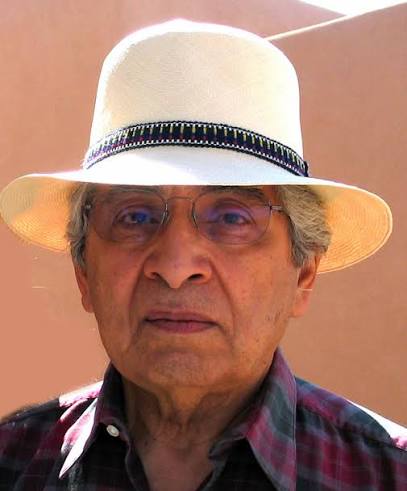 Far South Side Literary Bus Tour gave tour participants the opportunity to visit several sites important to Martinez-Serros’ life and fiction.
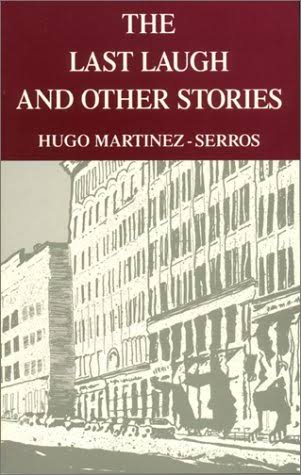
Hugo Martinez-Serros (1930-2026) was a professor of Latin American and Spanish Literature at Lawrence University in Appleton, Wisconsin for 29 years, from 1966-1995. He previously taught at Knox College and the University of Oklahoma. He earned a bachelor’s degree in Spanish from the University of Chicago, and a master’s degree and Ph.D. from Northwestern University. However, he was also a writer of English-language fiction, generally set in the Bush neighborhood and other southeast side Chicago neighborhoods and reflecting experiences similar to those of his Mexican immigrant childhood in the 1930s and 1940s. His first and most well-known collection of short fiction is The Last Laugh and Other Stories (1988). His other works include the collection Steeling Chicago: South Side Stories and the novels Enamored Dust and The Brothers Duran of Mexican South Chicago.
In a tribute published on the occasion of his death, Lawrence University recalled Martinez-Serros as “committed to education and social justice. He adored teaching and though he expected much of his students, he was always encouraging and supportive of them.” One former student recalled that Martinez-Serros “was obsessive in his drive to have students not simply read and follow plot, but also to live within the words on the page . . . [and] never let general observations on characters or narrative go unchallenged, always exhorting the student to justify based on text.” Another former student remembered him as encouraging her “to be open, to adapt, and to fully embrace a new culture—even when it meant stepping far outside my comfort zone and learning to accept whatever was placed before me.”
When Martinez-Serros retired from Lawrence in 1995, he was awarded an honorary degree and cited for his stories “’rich, blistering indictments of racism’” and for being “a pioneer of the study of Spanish-American literature.”
The Bush Neighborhood
The small Bush neighborhood is part of the South Chicago Community Area. Its boundaries are roughly 83rd Street on the north, 87th street on the south, the Metra Electric District Line to the west, and the former U.S. Steel South Works site (now Steelworkers Park and Park No. 566 “USX”) at Green Bay Avenue on the east. The South Works dominated the neighborhood during the late 19th Century and throughout the 20th Century, employing most of its residents and filling its streets with the sounds, smells, and industrial output of the steel production process. The North Chicago Rolling Mills first established a 73-acre steel mill at the South Works site in 1880. Eventually, the facility would expand up to 575 acres by dumping slag into the lake. After years of a dwindling workforce due to production efficiency, foreign competition, and a series of energy crises, South Works closed on April 10th, 1992.
The Bush neighborhood was one of the “original mill neighborhoods” of the South Chicago community area, according to the Encyclopedia of Chicago. As new ethnic groups arrived to work in the steel mills in the early 20th Century, they settled in the Bush and other neighborhoods close to the mills, while more established ethnic groups “tended to migrate [southeast] across the [Calumet] river to the better neighborhoods on the East Side.” The Bush was “[b]athed in the soot of the steel furnaces [and] became notorious throughout Chicago for its poor environmental and economic conditions.”
This is the area of Hugo Martinez-Serros’ childhood and where many of his stories are set. Most of Martinez-Serros’ stories depict young Mexican American immigrant boys who live in this area during the 1930s or 1940s. Martinez-Serros variously uses first, second, and third person narration to depict the challenges of the boys’ lives as poor immigrants in this working-class neighborhood in the shadow of steel mills, crisscrossed by railroads and streetcars. While most of his characters are Mexican American, white ethnic and Black residents appear in the stories, with white characters often figures of authority such as teachers, landlords, and streetcar conductors. Often the protagonist boys are the children of Jose Maria Rivera, a hard-working, imposing, sometimes-cruel father who works in a steel mill.
South Chicago Neighborhood Landmarks
Most accounts of Chicago’s early Mexican immigrant community highlight Our Lady of Guadalupe Church (3200 E. 91st Street). While Our 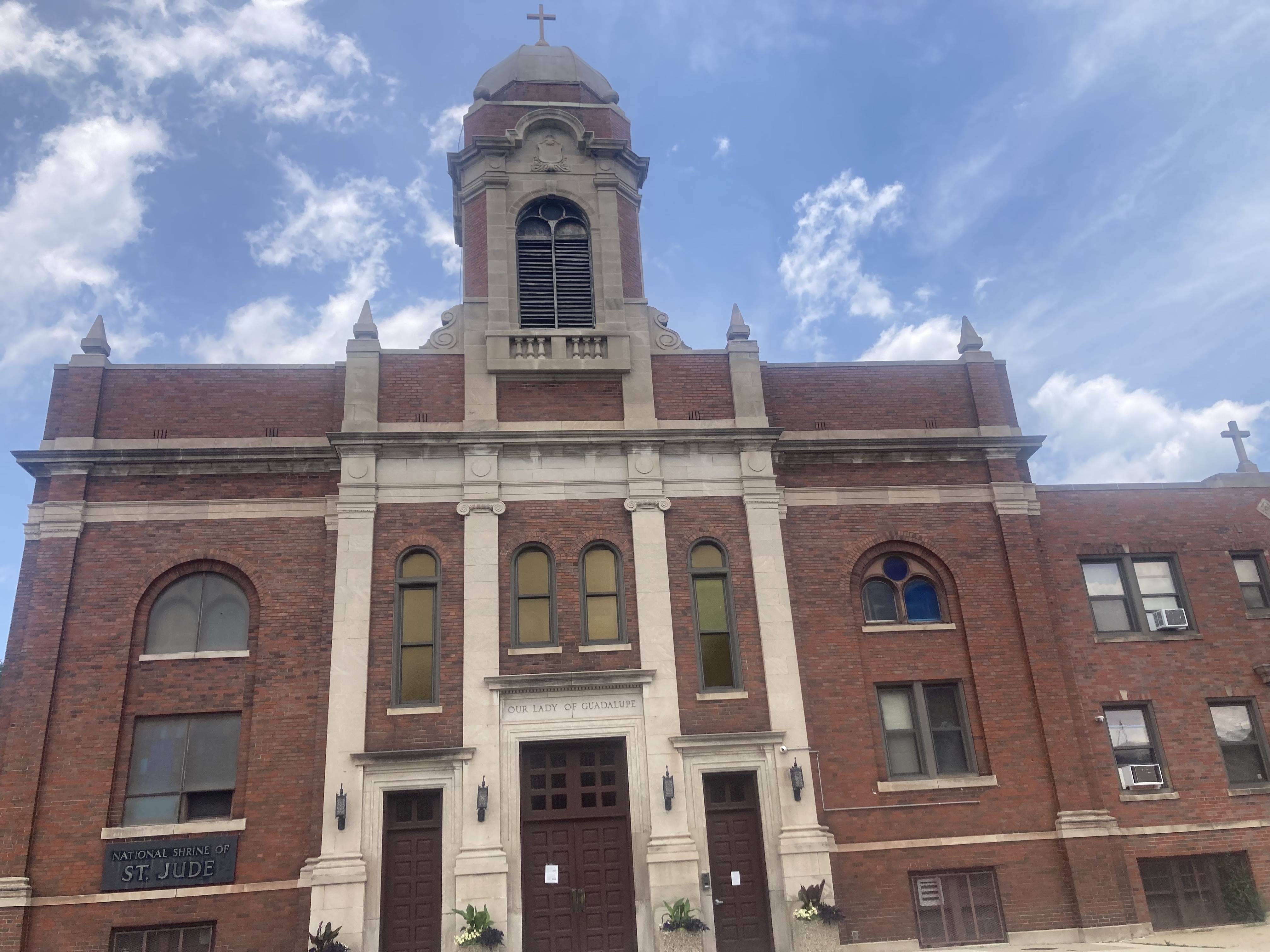 Lady of Guadalupe has been a major community institution in South Chicago’s Mexican American community since its’ founding in 1923, Martinez-Serros’ fictional characters do not go to church and attend public school. In one story, “Learn, Learn,” the religious skeptic Jose Maria regularly sends his sons to pick up the Our Lady of Guadalupe Church bulletin, so he can identify mistakes in the pastor’s writing and needle him with anonymous letters pointing out his errors. The pastor, Fr. Tortas, may be a fictional depiction of Fr. James Tort, the Claretian priest who oversaw the construction of the current church building in 1929.
Another neighborhood landmark important to the young boys in several of Martinez-Serros’ stories is the South Chicago YMCA, located just west of Our Lady of Guadalupe at 3039 E. 91st Street. The YMCA closed in 2017 after more than 90 years serving the community. The building was adaptively redeveloped and reopened as senior housing in 2021.
A group of neighborhood landmarks of a different type are the numerous streetcorner taverns that dot the Bush neighborhood, despite its small size. In the late 19th Century through much of the 20th, the streetcorner tavern was an important “third place” in Chicago’s working class, immigrant neighborhoods. Taverns were also among the service businesses that augmented neighborhood economies and catered to the workers of Chicago’s industrial neighborhoods.
In Martinez-Serros’ story “The Last Laugh,” a Mexican American family lives above a tavern named “Burley Liquors” during the 1930s or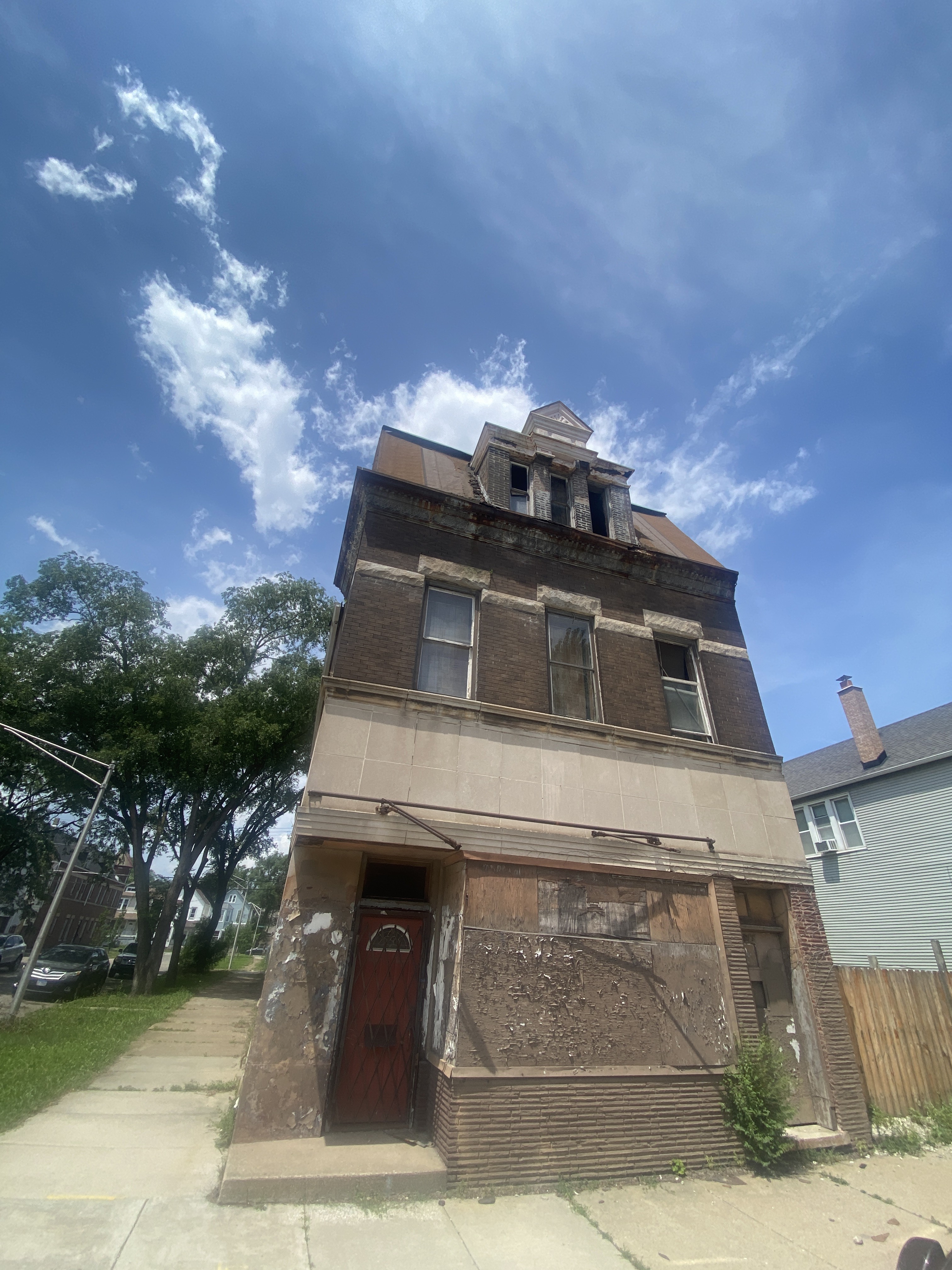 1940s. It is unclear whether Martinez-Serros modeled the fictional tavern on a particular real-life building, but a former tavern building at 8358 S. Burley Avenue is one of multiple former tavern buildings in the Bush neighborhood that could have been his inspiration. (One detail suggesting that the 8358 S. Burley building may be the model for the family’s home appears in another Martinez-Serros story, “The Birthday Present." In that story, the protagonist boy leaves his home and walks south on Burley. The first details mentioned after the boy “enter[s] the street” are “Cars turning at 85th Street,” suggesting that the boy’s home is on either the 8300 or 8400 block of south Burley).
In “The Last Laugh,” Jose Maria makes a deal with the owner of the tavern building, a local doctor. Under the deal, Jose Maria and his family refurbish and move into the “large flat” above the tavern, a “rattrap” previously used by two alcoholic regulars of the tavern for parties. The rent is “a pittance” but the boys – Jaime and Lazaro – must also stoke the basement furnace for the building, providing consistent heat that had been previously lacking. While this arrangement provides the family with a place to live, it incurs the resentment of the two regulars, who resent the boys’ intrusion into their basement crash pad. The two regulars also endure the ridicule of the bartender Morris and the bar patrons because of the Mexican boys’ success in maintaining the same furnace that the two regulars had previously claimed did not work.
The story vividly describes the tavern and its culture: “Burley Liquors was open seven days a week, from early morning until after midnight. Lazaro and Jaime grew accustomed to entering it, yet they never forgot it was a man’s world, a place for adults, for tough women. There, voices were loud, laughter raucous, the air thick with cigarette smoke and the reek of alcohol and the foulest language they have ever heard. It was a place that made them feel like intruders, that admitted them grudgingly. They were quick to spot a hostile eye, to see bodies stiffen at their entry, to detect disapproving silences. But Morris was there – short, thickset, massive, like a bulldog, the bulldog on the nose of a Mack truck, or the truck itself – and they knew they were safe.”
“Distillation”
Martinez-Serros’ most well-known story is “Distillation,” from his collection The Last Laugh and Other Stories (1988). The story follows an epic journey of the main character, his father Jose Maria, and his brothers to the Chicago city dump from the family’s home in the Bush neighborhood via a wagon that the father pulls himself. Jose Maria scavenges fruit and vegetables from the dump and conscripts his sons to help. While the trip could be accomplished today by car in approximately 15 minutes, to the children in the story it is “a crossing that would reach almost a full length of the longest line that could be drawn in the world as I knew it. That world, dense and more durable than a name, extended just beyond South Chicago.”
 In “Distillation,” the narrator describes the importance of Burley Avenue as a connection between the Bush neighborhood and the neighborhoods to the south: “For one block Burley Avenue was a corridor—the only one for some distance around—that allowed movement north and south.”
The narrator also describes the railroad tracks that once crossed Burley between 86th and 87th Streets: “We rattled over the railroad crossing at Burley Avenue, a busy, noisy pass, and this made me stiffen and press my palms against my ears.”
This once-busy crossing carried the tracks of the Elgin, Joliet, and Eastern Railway (the “EJ&E”) and led directly into South Works. According to Chicago community historian Mike Medina, during the 1930s this crossing “would have been a very busy line that certainly would have been noisy.”
Martinez-Serros’ story “The Birthday Present” also describes this crossing. The protagonist boy, described in the second person as walking south on Burley, looks east into the South Works: “You reach the crossing, the gates are up, black and white like a zebra, you look to your left. The train yard, an engine pulling gondolas full of coke. You pause, you stop. Just beyond you the engine slams to a halt, suddenly, and a tremor shudders through the cards, shakes coke loose. A man throws a switch, waves, the engine starts up slowly. In the background, steel mills, blue sky above.”
Today, the tracks are gone, and the former South Works area just to the east is overgrown greenery. Few, if any, remnants of the crossing, its sound and movement, or its industrial importance remain.
Martinez-Serros’ Schools
Martinez-Serros graduated from James N. Thorp Elementary School at 8914 S. Buffalo Avenue in 1944.
Several of Martinez-Serros short stories, including “Her,” “The Birthday Present,” and “Octavo,” may likely draw on his experiences at Thorp in depicting the elementary school experiences of his youthful characters during the 1930s and 1940s. Their school days are filled with laughter and joyful camaraderie but fraught with the cruelty and humiliation of Mexican students by Anglo teachers, often depicted as women of Irish descent.
The boy’s walk to school in “The Birthday Present” follows the route Martinez-Serros would have taken from the Bush to Thorp. The boy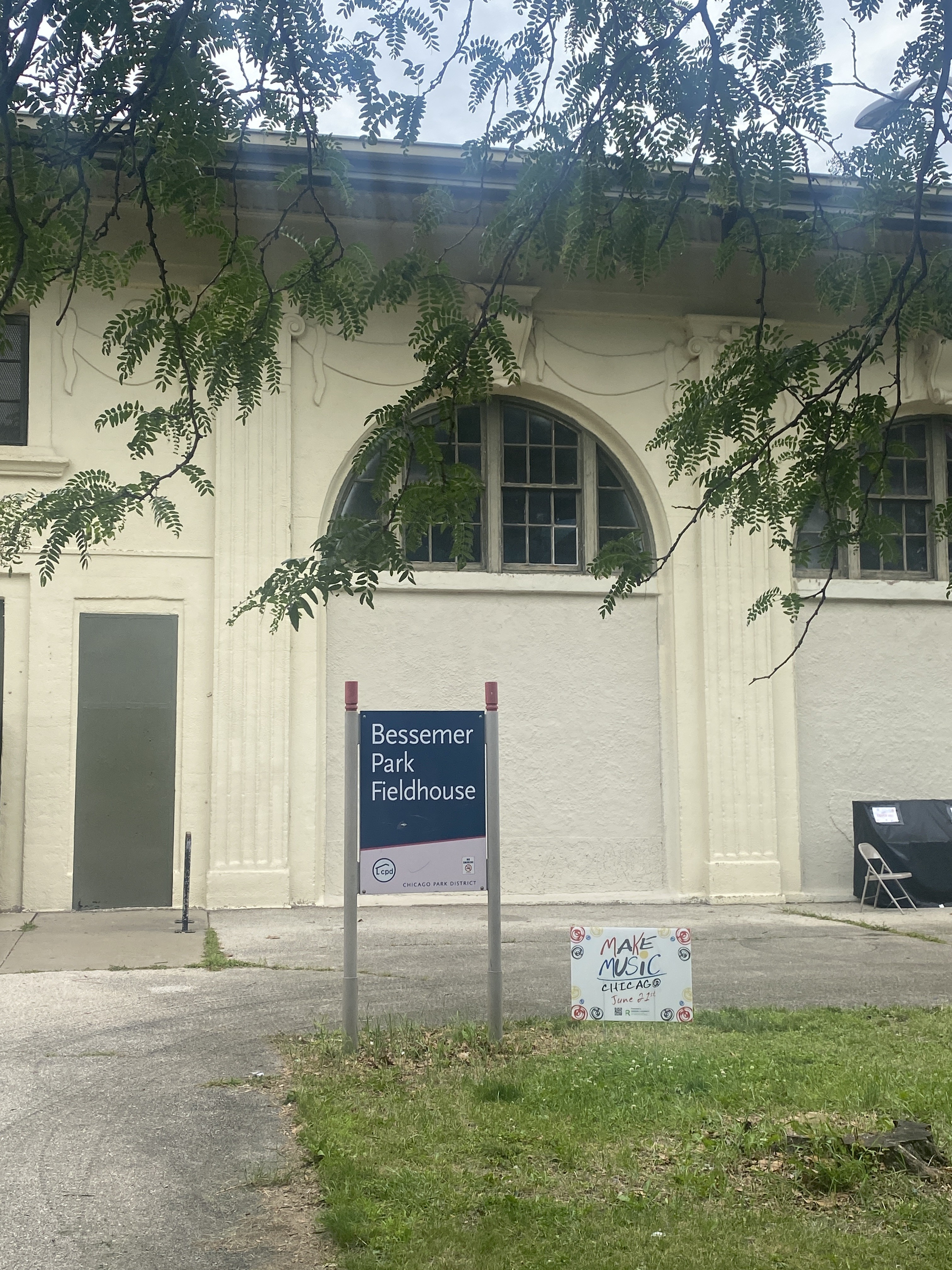 crosses the intersection where Burley curves east into 87th Street and then follows the alley between Buffalo and Burley to Thorp: “No patrol boy yet. There she comes in her car, Mrs. Flynn. You smile and wave at your teacher. She takes the curve, you smiling and waving still, but she does not wave, does not turn to look at you. You run across the street, into the alley where the street would go if it didn’t make the wide turn. It is your shortcut to the school’s door, you walk very slowly.”
The family’s southwesterly journey in “Distillation” from the Bush neighborhood to the Chicago city dump likely takes them past Bessemer Park, 8930 S. Muskegon Avenue and James H. Bowen High School, 2710 E. 89th Street, an architecturally distinctive building. Martinez-Serros himself graduated from Bowen in 1948.
The narrator states, “At 89th Street my father followed a southwesterly course, going faster and faster, farther and farther from the steel mills, moving beyond the commercial area into a zone where the houses looked more and more expensive and the lawns grew thicker and greener.”
According to the Chicago Park District, the South Park Commission dedicated this park in 1905 as part of a neighborhood park system designed by landscape architects the Olmsted Brothers and architects Daniel H. Burnham & Co. In 1907 the park was named for Sir Henry Bessemer (1813 – 1898), known for developing the “Bessemer Process” – the first efficient means of mass-producing steel. The process involved injecting air into iron to remove impurities and thus make the metal more durable.
Bessemer Park was aptly named, as the South Works and other steel mills east of the park dominated the area visually, emotionally, and economically. Steelmaking was the lifeblood of those neighborhoods and those who lived there, like the fictional Jose Maria.
Bowen High School has a dramatic setting that befits its distinguished architecture, with its red and brown brick façade rising to the east behind the green landscape of Bessemer Park. Bowen’s current building (1910) was designed by Dwight H. Perkins, and in its design resembles Perkins’ more famous Carl Schurz High School (also 1910) located on the northwest side at the corner of Milwaukee Avenue and Irving Park Road. According to a July 2, 2026 story by Lee Bey in the Chicago Sun-Times, the Illinois National Register Advisory Council voted to recommend that the National Park Service add the building to the National Register of Historic Places. According to Bey, “Bowen is a wide four-story building clad in red and orange brick and terra cotta trim. The building has grace and visual power with its prominent overhanging gabled roofs, strong vertical lines and abundance of windows that let in natural light and provide views of Bessemer Park across 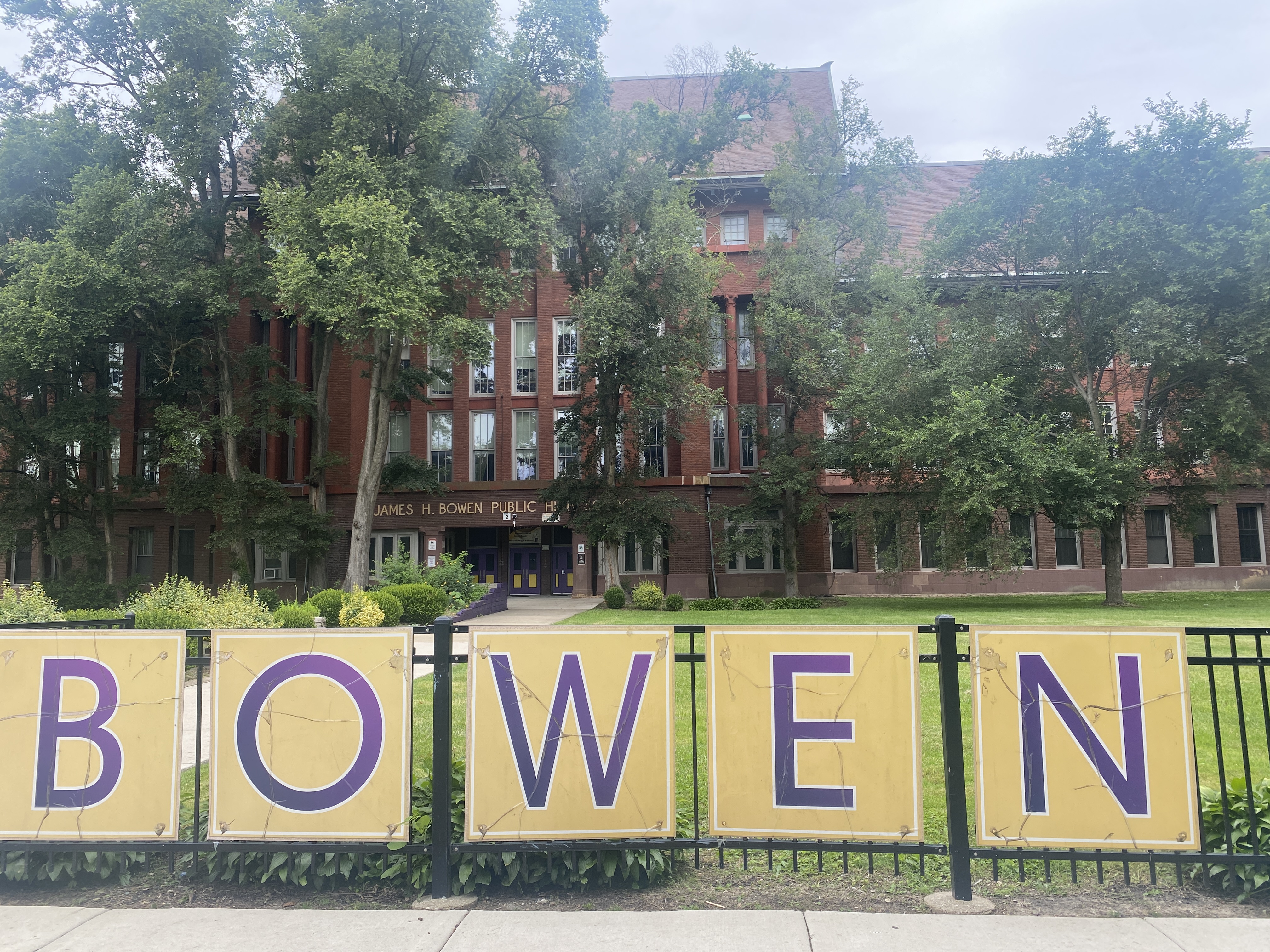 89th Street.”
Marc Kelly Smith, the creator of the Poetry Slam, is also a Bowen alumnus, having graduated in 1967. According to the Chicago Literary Hall of Fame’s description of Uptown’s Green Mill Tavern, Smith “is considered the founder of the Slam Poetry movement. Smith was a socialist construction worker and a poet who met with like-minded spoken word artists to perform outside the elitist world of literary poetry. In 1984, he started a kind of arts variety show called Monday Night Poetry Reading at the Get Me High Lounge in Bucktown. This event became the first slam in 1986, emphasizing poetry as performance of experience by and for ordinary people. The next year, 1987, the event migrated to the Green Mill, where the Uptown Poetry Slam has been ever since.”
Another famous Bowen alumnus, quoted in Bey’s article, is film director Andrew Davis. His 1978 film Stony Island stars the late Chicago saxophonist Gene Barge, a young Susanna Hoffs, and the director’s brother Richie (now a musician in the band the Chicago Catz) and depicts the creation of an integrated soul band. Stony Island was shot on location in Chicago and includes footage of the 1976 funeral of Mayor Richard J. Daley, whose death is incorporated into the plot of the film. Andrew Davis’ most famous film may be The Fugitive (1993), starring Chicago native Harrison Ford, which is also shot in Chicago and whose cast includes Barge, Chicago jazz musician John M. Watson, Sr., and Evergreen Park native Jane Lynch.
Jazz drummer Gene Krupa also graduated from Bowen.
Nearing the Destination
As the railroad capital of the United States, Chicago is crisscrossed by railroad tracks. Originally, many tracks were at grade level; eventually, for safety purposes, many tracks were elevated and run via viaducts over neighborhood streets. Viaducts thus both are markers of transport from one place to another, and also markers of division between one place and another. In a highly segregated city such as Chicago, such division markers often carry with them notions of divisions between class and race. This distinctive physical feature of Chicago’s landscape is often reflected in Chicago literature. For example, in Stuart Dybek’s short story “Blight,” set on the southwest side, a viaduct becomes a barrier between a white and a black neighborhood, but early 1960s neighborhood vocal groups from either side harmonize and appreciate each other’s music from the safe distance of their respective ends of the viaduct.
In “Distillation,” a crucial moment in the journey to the Chicago city dump occurs at the Colfax Avenue viaduct under the Belt Railway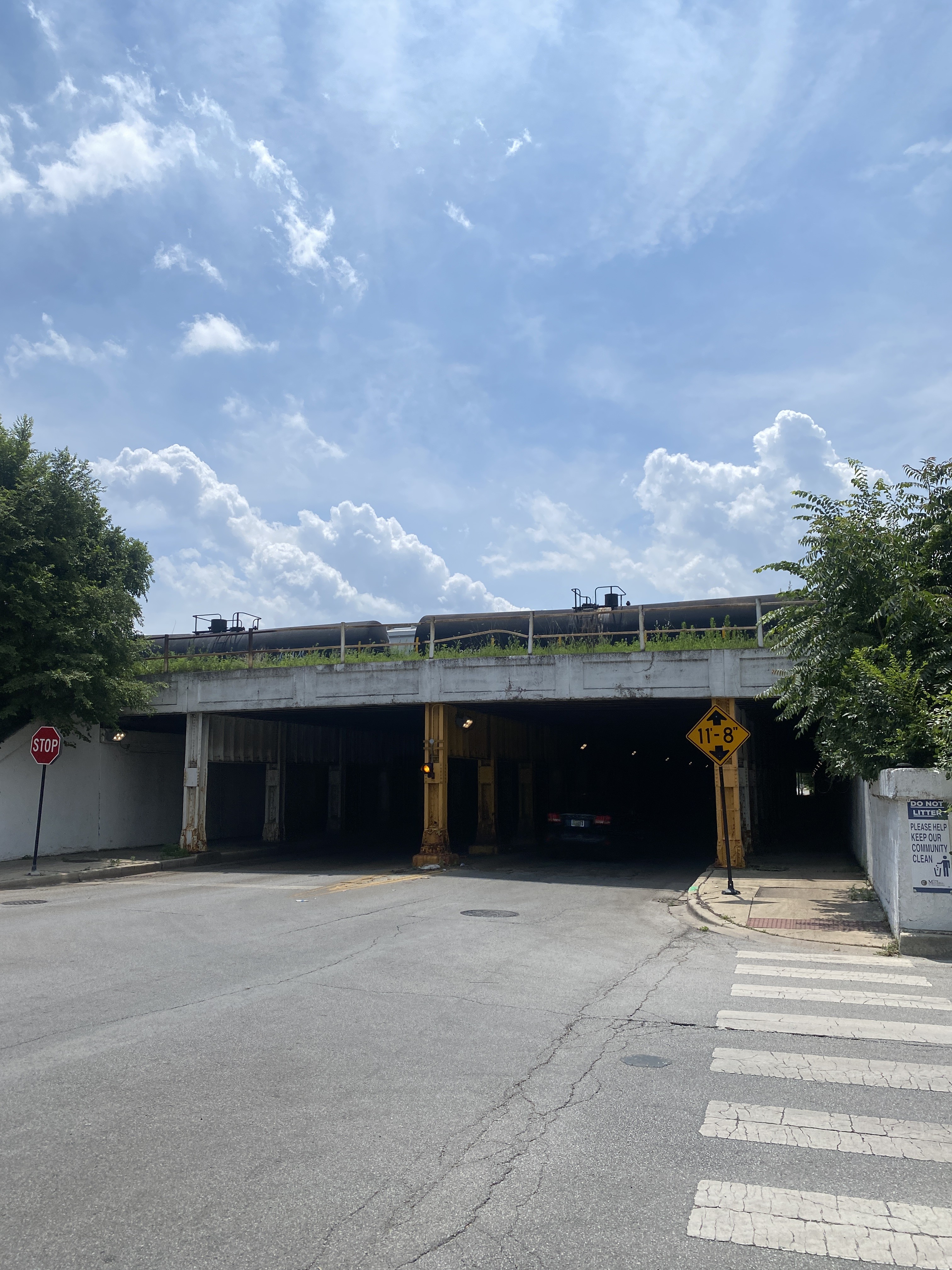 Company and Chicago Rail Link (formerly the Chicago, Rock Island, and Pacific) tracks, on Colfax Avenue between 94th and 95th Streets. The narrator describes the scene as follows:
“At the end of a street that advanced between rows of brick bungalows stood the tunnel. We entered it and I tensed, at once exhilarated and alarmed by the wagon’s din, frightened by the sudden darkness yet braving it because my father was there. A long time passed before we reached midpoint, where I feared everything would cave in on us. Then slowly my father’s silhouette, pillarlike, filled the space ahead of me, growing larger and larger as we approached the light. Beyond the tunnel there were no houses, and we emerged into the radiance of 95th Street and Torrence Avenue.” The narrator’s description reflects the overwhelming, transformational childhood experience that negotiating the liminal space of a Chicago viaduct can provide.
In another Martinez-Serros story, “Kildeer,” the narrator describes how the land south and west of this spot – now built up with mid-20th-Century homes – was farmed by Mexican American immigrants in the 1930s: “acres of land with few trees reached south as far as the 103rd Street bridge and west to the highway – railroad land fallen into disuse. It hid old wells and scant remains of structures razed long ago. Their milpa was off Torrence Avenue, just west of where the long curve ended. Jose Maria, like other Mexican immigrants, had found his way there some years earlier, had cleared several acres, had turned them over with a hoe and worked the simple magic that gave corn, tomatoes, potatoes, squash, coriander and much more. It was more land and richer than any his father had cultivated in Mexico.”
The family’s destination in “Distillation,” the Chicago city dump, is now Harborside International Golf Course (110001 S. Doty Avenue East).
Martinez-Serros’ narrator, one of the boys recalling his childhood years later, describes the dump as follows:
“The full stink of decomposing garbage, fused to that of slow-burning trash, struck us. Before us was the city dump—a great raw sore on the landscape, a leprous tract oozing flames and smoldering, hellish grounds columned in smoke and grown tumid across years. Fragments of glass, metal, wood, lay everywhere, some of them menacingly jagged where they had not been driven into the earth by the wheels of the ponderous trucks.”
Earlier, the narrator describes his memory of the surrounding landscape from atop the 103rd Street bridge over the Norfolk Southern Railroad’s Calumet Yard, as the wagon reaches its apex:
“We were at the summit and the world fell away from us far into the horizon. To the east, steel mills, granaries, railroad yards, a profusion of industrial plants; to the north and south, prairies, trees, some houses; to the west, main arteries, more plants, the great smoking heaps of the city dump, and, farther still, houses and a green sweep of trees that extended as far as the eye saw. Years have changed this area in many ways, but that landscape, like a photo negative, glows in memory’s light.”
According to a 1971 Chicago Tribune article, the city stopped using this area for a garbage dump on March 1, 1971, after having previously so used it “for years.” In 1954, the South Side forum, “representing citizens living north of the dump,” had objected to both “odor” and the height of the “heaps” or “hills” of garbage at the dump, also according to the Tribune. Two such heaps, named “Mounts Pacini and Du Bois” for local aldermen, had attained heights of 45 feet, as estimated by both forum members and city officials.
 Owned by the Illinois International Port District, Harborside International Golf Center was opened in 1995 on the site of the former dump. According to a 1996 article in American City & County, the dump “originally used for disposal of municipal solid waste and, later, for incinerator ash and wastewater sludge. Another portion was used as a landfill for construction debris.” For conversion to a golf course “the Illinois Environmental Protection Agency required that the 225 acres that comprised the former landfill be capped with two feet of impervious clay to prevent runoff and seepage into groundwater . . . above the cap, a two-foot layer of sand and topsoil formed a growing medium for grass.”
East Chicago, Indiana native and University of Notre Dame history professor Emiliano Aguilar chose the golf course / former dump site as the place important to Martinez-Serros as part of the Midwestern literary journal The New Territory’s “Literary Landscapes” series. Aguilar’s essay was included in Lingering Inland, a compilation of the “Literary Landscapes” essays edited by Andy Oler and published in 2025. Aguilar’s essay notes that “Chicago’s South Side is littered with the remains of its industrial past.” While he sees Harborside International as evidence of the revitalization of a once-bleak post-industrial landscape, Aguilar acknowledges that “In some cases, rich historical sites . . . are under threat of removal in the name of progress. While some residents are content with this change, others view it as a loss of the shared heritage and history of the area.”
While few would lament the improvement of the dump area, it would be easy to play a round of golf here without realizing that in this very place families like Martinez-Serros’ once reclaimed others’ cast-off refuse for their own survival.
Hugo Martinez-Serros’ fiction vividly depicts the now far-off world of Mexican immigrants in South Chicago in the 1930s and 1940s. The landscape reflected in his fiction – with its steel mills, streetcars, unheated flats, and streetcorner taverns – may be fading even from memory. Nonetheless, his important voice survives, as do many of the Chicago places, however changed, where he and his characters lived.
John Lillig is an English teacher at Loyola Academy in Wilmette, Illinois and a member of the Advisory Board of the Chicago Literary Hall of Fame. He has taught Chicago Literature courses at both the college and high school level. He was previously an attorney in private practice whose clients included writers, artists, and nonprofit organizations.


 Back to Blog