Eleanor Taylor Bland [December 31, 1944-June 2, 2010]: Slices of Life Within Black Culture
Friday, July 24, 2026
by Sandra Jackson-Opoku
Crime writers who know their history invariably invoke the legacy of Eleanor Taylor Bland. I count myself incredibly lucky to have known her personally, and been a part of her community. Her footprints were so indelible that we never realized how deep they were until she no longerwalked among us.
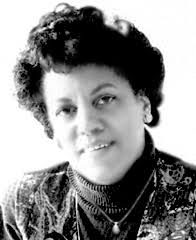 Eleanor Taylor Bland was kind, supportive, generous, and graceful to all who knew her as a friend, fan, colleague, and mentee. I have fond memories of her presence at literary events in and around Chicago, including the annual Gwendolyn Brooks Conference of Black Literature held at Chicago State University from the 1980s to the middle-2000-teens.
Bland's impact on the national and local Chicago literary scene, and the crime writing community in general, was nothing short of remarkable. She was especially known as a mentor of younger writers.
Tracy Clark, though she is far too modest to admit this, is Eleanor Taylor Bland’s heir apparent in many respects. Like her mentor, Clark has inscribed the figure of the Black Chicago female detective into the crime writing genre with two detective series featuring a private investigator, CPD homicide detective.
Tracy remembers Bland as something of an elder stateswoman within a community of writers roaming the crime writing circuit in "a little gang" of mutual support. This was back in the days when the presence of Black crime writers was far less visible. Bland, along with pioneers like Walter Moseley, Valerie Wilson Wesley, and Barbara Neeley, helped force open the doors of opportunity that many of us have walked through behind them.
The legendary Sara Paretsky, godmother of Chicago crime writing, says of Bland, “She was theamong the first. . . to create a hero who challenged the ‘mammy-whore’ stereotypes of African-American women. She believed the crime novel was a perfect vehicle for pushing the boundaries of America’s class/race/sex consciousness. . . With Marti Macallister, she said, she could ‘comment on slices of life within black culture.’”
 Bland eventually went on to serve as chair in Sisters in Crime, the enduring organization Paretsky founded to advocate for the advancement, recognition, and professional development of women crime writers. Sin-C now honors this legacy with the Eleanor Taylor Bland Crime Fiction Writers of Color Award, an annual $2,000 grant designed to support emerging BIPOC writers with their career development, research, and writing expenses.
Bland is legendary for introducing the first African American female police detective in crimefiction -- Marti MacAlister a police detective in a small town in northern Illinois.
Like Bland herself, MacAlister is a dedicated mother, family woman, and career professional in the police department of Lincoln Prairie, a fictionalized version of Waukegan, Illinois. She investigates the usual range of crimes, while also navigating gender and racial discrimination inpolicing, young people’s social challenges, homelessness, poverty, spousal and child abuse, and single parenthood in the aftermath of her husband’s tragic death.
Born in Boston, Massachusetts as the product of an interracial relationship, Eleanor Taylor Bland encountered her own share of challenges in personal and family life. She was a very young wifeand mother, having married at the tender age of fourteen. She moved with her sailor husbandaround the country, finally settling in Waukegan where he was stationed at the Great Lakes Naval base. Their thirty-one-year marriage eventually ended in separation.
Despite an education interrupted early, Bland went on to earn a degree in accounting and education, then worked as a cost accountant while mothering two sons, and helping raise some of her grandchildren. In the 1970s she was diagnosed with Gardner’s Syndrome, a rare genetic disorder for which she was given two years to live. Defying those odds, Eleanor Taylor Bland would live another forty years, adopting the philosophy of "living in the present." In the late 1990s, she retired from corporate life to begin writing full-time.
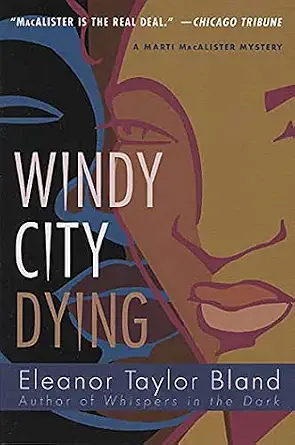 Bland was author of the 16-book Marti MacAlister series, and editor of the 2004 anthology Shades of Black: Crime and Mystery Stories by African-American Authors. Unlike the iconic “loner” figure in many detective stories, Black women tend to create protagonists with families, children, and stable relationships. Bland not only wrote in this tradition, she lived it in her own life. Her granddaughter, Nia Love, honors this legacy by dedicating herself to preserving Bland's memory as a writer, literary pioneer, and mentor.
In the words of Tracy Clark, “I wouldn't be a published writer today without Eleanor. She believed in my writing well before I was confident enough to believe in it myself. Her encouragement, her friendship, her mentorship, her kindness, guide my pen today, and I can still hear her voice in my head when I write. Keep writing, she'd always tell me. Keep writing. Because of Eleanor, I do. Because of Eleanor, I can.”
Sandra Jackson-Opoku is an award-winning writer of literary and historical novels, is the author of Savvy Summers and the Sweet Potato Crimes, and Savvy Summers and the Po’boy Perils. Her award-winning culinary mystery series, won The Malice Minotaur Award for First Mystery novel, and was a finalist for the Agatha, Mary Higgins Clark, and Macavity Awards in crime writing.


 Back to Blog