A Conversation with Krystle Ratticus and Dmitry Samarov
Thursday, September 10, 2026
by Donald G. Evans
Krystle Ratticus paints and writes and, like most serious artists, makes her living in other ways. She works at a record store now, but has spent lots of time as a short order cook, a barista, and a server. She worked for a long time in retail at American Science 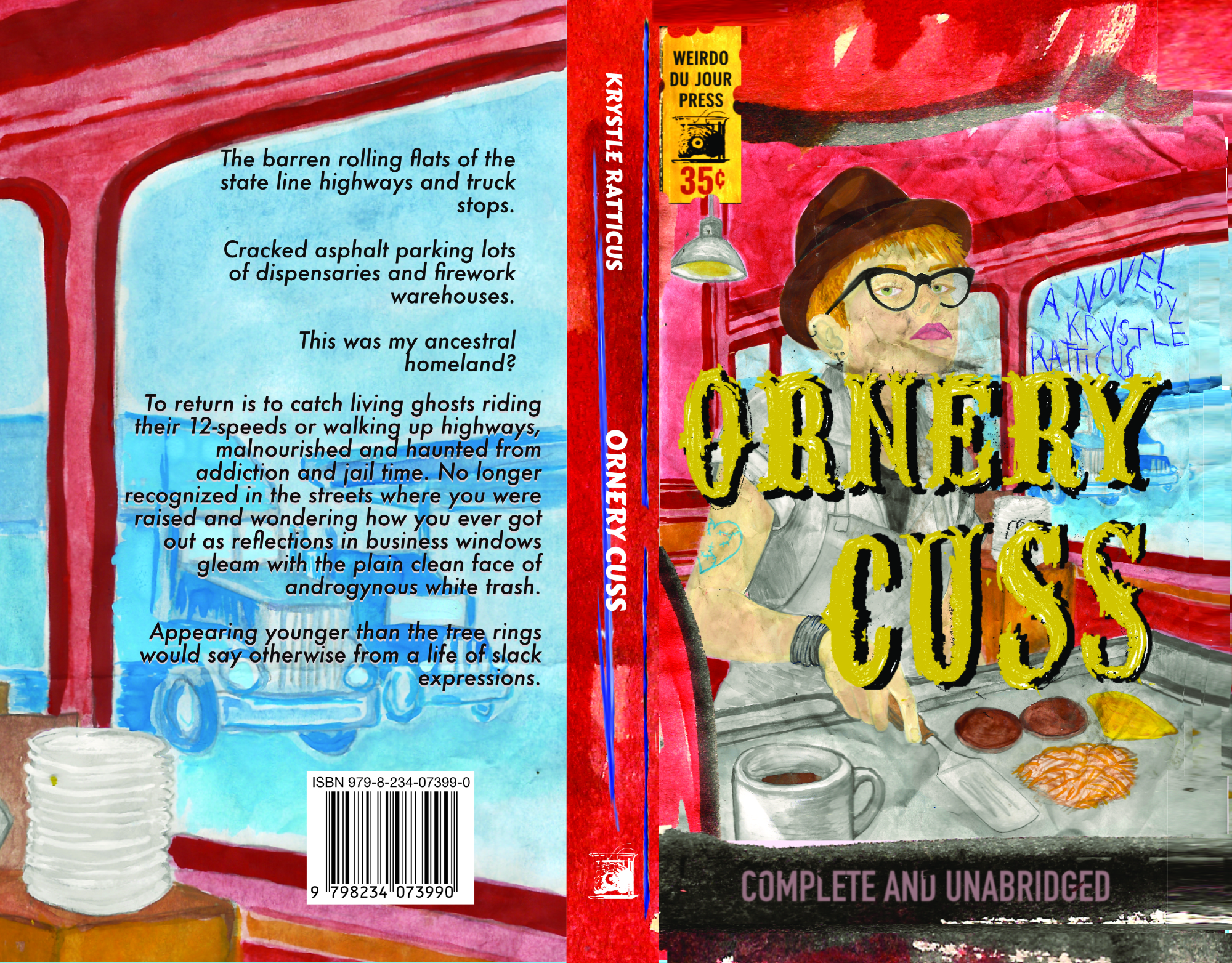 & Surplus when she first came to Chicago, then, after attending college at Malcolm X in her late 20s/early 30s, she worked briefly in the funeral industry. Anybody who’s tried to create art before or after working a full-time job knows the difficulty. A lot of artists slowly relegate their work to hobby status, or stop doing it altogether. Krystle has persisted. Her debut novel, Ornery Cuss, is decades in the making. A series of linked stories take us through the life of a narrator much like Krystle, though this is a fictionalized account of her personal history. The narrator hails from a small town in Iowa, but moves around, sometimes out of necessity, sometimes out of desire to stumble into a better world. Chicago suits her. She finds the city, then boomerangs back there as a way to preserve sanity and find purpose. Hers is a hard life, one of neglect and abuse and youthful stupidity, that presents itself, in the telling, as a matter of course. But our smart, tough narrator keeps moving, keeps surviving, keeps creating.
Krystle published the book herself, with some help from artist-writer Dmitry Samarov. Like Dmitry, Krystle’s do-it-yourself spirt is borne of artistic integrity: her concern is to produce the best version of her work and only through control does she believe that possible. She promotes and sells the book through her website, and lists stores who also carry copies. She’s booked to do several readings, including as part of the MissSpoken series at Cole’s Bar, on October 26.
DGE: I I like the book a lot. It’s a powerful, engaging story. This is your first novel.
KR: Yes, it is.
DGE: You're calling it a novel, but there are several pieces in which the narrator is referred to as Krystle.
KR: Yep.
DGE: And the name is spelled exactly as yours is. So there’s this invitation to read it as a memoir, or the truth, isn’t there?
KR: It's a novel. It's a novel. It's very memoiry, but it's definitely a novel. Novel just feels more appropriate.
DGE: Why more appropriate?
KR: All the short stories are like novel experiences, and it falls in line with the design of it, like a pulpy dime store novel thing.
DGE: The narrator is telling on people, right?
KR: Oh, yes.
(Dmitry laughs)
DGE: There's a definite awareness that secrets are being let out.
KR: Yeah, the unspoken is now out there.
DGE: Was there some hesitancy, either for legal reasons or for personal reasons, about people identifying themselves in your stories?
KR: A little bit of both. There are some people I'm scared of that I I wrote about, and I'm not sure what they would do if they knew—I don’t know what they will do when they eventually find out. There were a lot of personal reasons, too. A lot of the people in the book are very close to me. Were very close to me. But I I had to tell what happened.
DGE: The novel hums with tension, in part because of this danger. The narrator finds herself in situations and with people who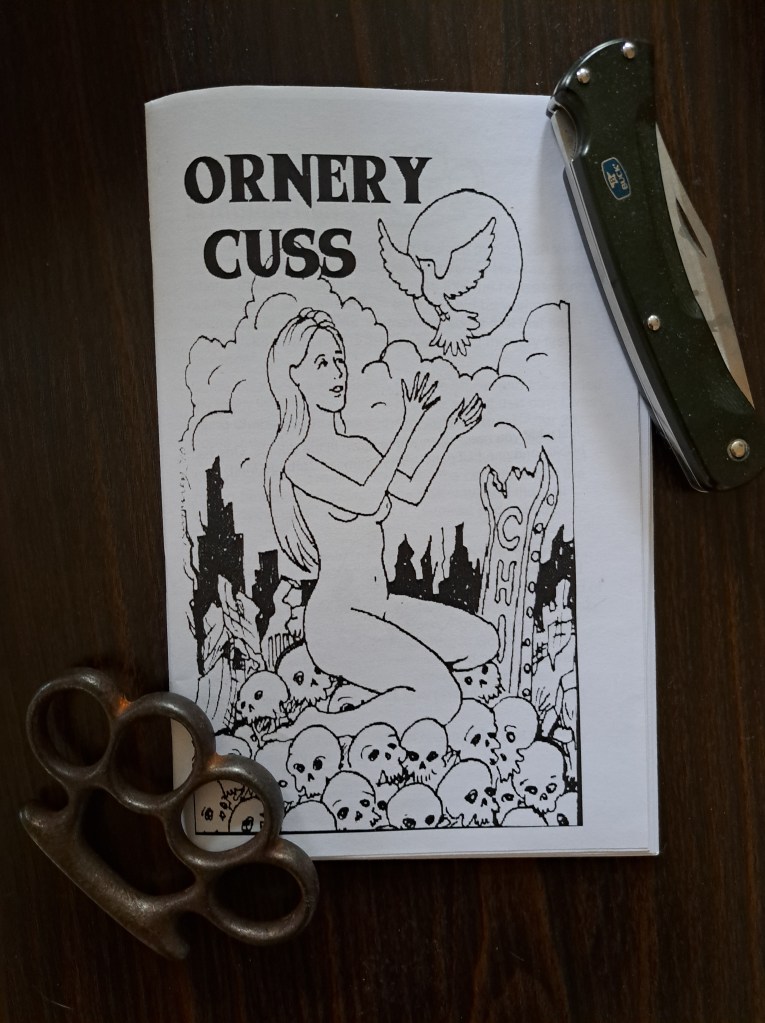 threaten her well-being, safety, and freedom. How she extricates herself from the danger propels the story. In those moments, though, the narrator does not seem particularly aware of the threats.
KR: In those moments the narrator, myself, was completely blind to what was really happening. Having repeatedly experienced seamy human behavior in the formative years, these scenarios I wrote about were never perceived as being out of the ordinary or unsafe. There was--and sometimes still is--a defensiveness or chip on the shoulder that willed me to say "no" or leave these situations without realizing the severity. It wasn't until many years later that enlightenment struck like lightning, and I became aware... with that much time having passed there was nothing to be done but write it out.
DGE: The book jacket summary calls the narrator a “loner.” Her independence is sometimes by choice and sometimes by circumstance. The cruelty of the Thanksgiving scene in Milwaukee, where a family stares at Krystle and calls her a loser, is disturbing. But your alto ego, at times incredibly immature, shines in moments like these, when she sees, with certainty, that it’s them, not her, in need of improvement.
KR: You've cut right to the bone regarding the protagonist. She has this duality of seeming childish but also moments of profound wisdom... maybe without even realizing it.
DGE: Let's back up. Weirdo Du Jour. The name of your press seems in keeping with the cover art and the texture and sensibility and voice of the novel. Tell me about Weirdo Du Jour.
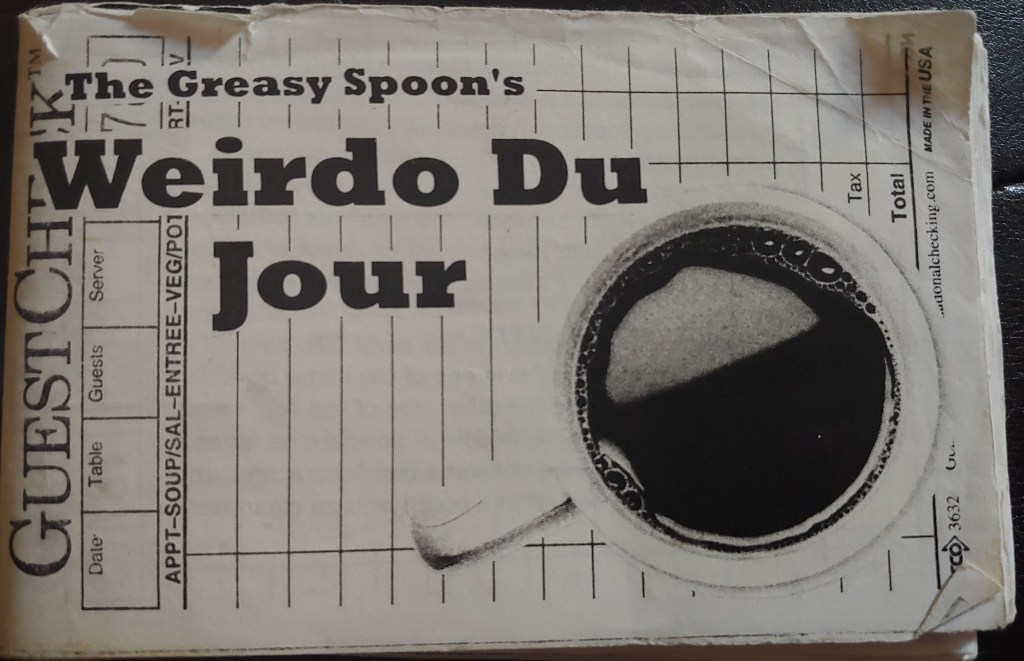
KR: Weirdo Du Jour started as a zine that I wrote in 2010. It was me just documenting a lot of customers that I dealt with working in a greasy spoon diner as a short order cook. The name just kind of stuck. It's been the most popular zine I've ever written. I keep reprinting it to this day. And when I decided to put this book out and publish it myself, it just seemed fitting. Like, all right, it's a press because I have been publishing my own zines for over 25 years, so why not I publish my own book? I'm a press, a Weirdo Du Jour Press.
DGE: Dmitry, how did you get involved as the book designer?
DS: How did I get involved? Well, I mean, I've known Krystle for a really long time. I knew her when she worked at the restaurant, which is a restaurant that no longer exists. It's called Feed, and it was at Chicago and California, right at the corner there, next to the Continental Bar. We met when she got a job there, quite a while ago, and shortly after she showed me this zine, and I was really impressed with it. Around then, my first cab book came out, and I tried to get U of C Press to give her a book contract, because I thought her writing deserved to be in a book. Then life went on, and we reconnected last year, sort of reconnected more intimately, in each other's lives. And this whole book idea came up again. Since I've been sort of publishing books--self-publishing sometimes, sometimes through small presses--I had learned the ropes or taught myself the ropes of it and offered my help, just design help and a little bit of editing. 97 percent of this book is Krystle.
DGE: The greasy spoon that you referred to, Krystle… based on the stories in Ornery Cuss, there were several of these jobs in your life, different restaurants, right?
KR: Yeah.
 DGE: Which is the one at which you were working when you started the project?
KR: It was at Feed when I started the Weirdo Du Jour zine.
DGE: One of the things I've admired about Dmitry, I mean, I admire his talent, both as an artist and a writer, but I admire his capacity and his willingness to just do things himself. He's focused on the work, and then he's trying to figure out, like all of us, who's the audience, and how do you make this pay for itself, and so forth, but really it’s about the work. Was your instinct to try to find a publisher, or do you have some of that instinct of Dmitry's and just want to get this finished and do the best you can with it?
KR: I just wanted to do it myself. I wanted full control over it. I've had experiences with editors, and I knew that finding a publisher would require a lot of trust, and back and forth to change certain things or give up control of other little details, and I just wasn't willing to do any of that. I wanted to make my book my way. I needed a lot of guidance with utilizing Ingram and software to get like every page lined up exactly--borders, fonts. I didn't really know how to do all that. With the years of making zines, it's always been cut and paste, very manual typesetting and photocopying. So trying to use technology was very foreign to me, and Dmitry was very great in helping me with that. We would sit down at his computer and go page through page, like “You like this?” “Do you like this?” “Do you like this?” “I want that.” “I want this” His editing was great, too. He really just helped with grammar and spelling for the most part. There was nothing changed at all when he edited this book.
DGE: There is some self-published work that's just spectacular, that compares favorably with anything out there. But there's also a lot of--I won't say garbage, it’s more a crisis of competence. Self-published books that just aren't worthwhile; they're not lasting; they’re not special. Of course, I would say the same about books published by mainstream presses. There are also a lot of people self-publishing books that maybe could use an editor, could use more drafting, could use more time. Could use more talent. But there's been this evolution. For a long time, self-published work had a stigma, and the stigma was: if you don't have a publisher, it's because nobody thinks this is good enough to publish. It was called a vanity project, and nobody would review a self-published book. People would come to a self-published book with the predisposed notion that this must be subpar, there must be reasons why a mainstream press or an independent press or a university press didn't publish it. In the music world, there's always been such a reverence for the Garage Band, the musicians just making music and doing it on their own. There’s almost like a a snobbery about discovering this band that only four other people know about. I feel like there should be the equivalent of that in literature, and this is the kind of book that gives me hope there could be something like that. Give me your thoughts about self-publishing and what you do with it now that you have a book.
KR: I'm so new to this whole world of books and self-publishing. I don't know if I could really speak on it outside of my experience. It was way easier than I thought it was going to be. Much more affordable than I thought it was going to be, as well. I somewhat kicked myself for waiting so long. But maybe that's just what I needed, was the time to have everything fall in place.
DGE: Is Dmitry helping with what comes next, finding readers and reviewers?
KR: Yeah, he's helped me connect with a lot of people. Actually, I am not great at that. I I am not super social and connected that way. I don't have much, if any, social media presence. It’s a whole new world because I'm meeting a lot of folks, but, you know, building confidence to go out there and push and try and do live readings and table events and sending copies to people who I think would like to read it. It's all a learning process, all baby steps.
DGE: Is it some of the same process as when your zine came out?
KR: I don't know. Zines are a different world. I was connected with zine people and zine readings and stores that would sell my stuff on consignment and mail order distros from around the country and the globe. I was connected with all of that for my zines. Books are a little bit different. There are some people who are willing to swing both ways, books and zines, and then other people just want straight books, and others want just straight zines. So there's a little overlap.
DS: Probably the zinesters think you sold out, right?
KR: I don't know. I don't know what they think.
DGE: Weirdo Du Jour was just one of your zines.
KR: I've done many. I did a zine for many years called Milk Milk Lemonaid. I did a proto book called Ornery Cuss as well. That was after a several-year hiatus of not making zines. I came out with that in 2023, and then this summer the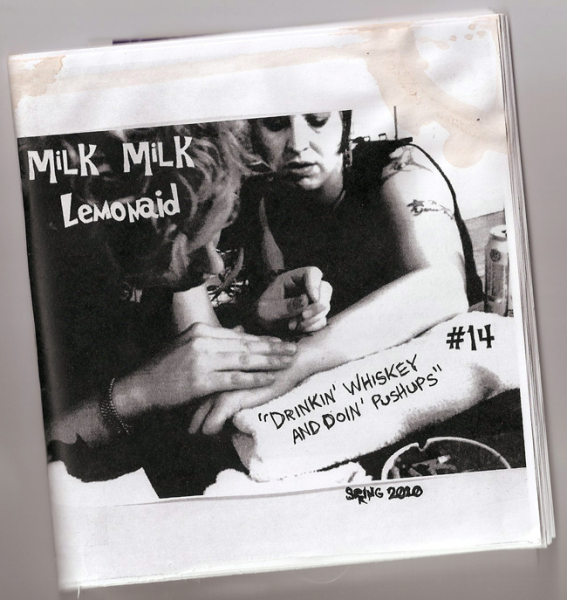 book followed.
DS: Krystle showed me zines from like 15 years ago where there are entries about how she's planning to write a book. So it's many years in the making, you know, and so it's not like oh, there's a cat.
KR: Right.
DS: There’s been a lot of prep. It's not a traditional debut writer type situation, where she’s straight out of college or something. There’s a lot of experience behind it.
DGE: There’s obviously a lot of experience that's captured and explored in the story. Since your cat just came by, let's go to that opening chapter and some of the some of the cat stuff, right?
KR: Oh yeah.
DGE: “Ceramic Cats”—that’s the opening chapter’s title-- immediately puts you in this particular world, and in this particular point of view of a woman who is in this world. It’s a totally fucked up world—death and deception and abandonment and poverty--but on the surface, everything seems in some ways quaint or okay. It's only when you get a little bit further into the obsession with the ceramic cats and the cat tchotchkes that it becomes a little bit eerie and upsetting. Tell me a little bit about cats in your life, and also about that idea that there's a lot of surface ordinariness that's not ordinary in in your stories.
KR: That story is about as true from life as can be. Only names were kind of changed there. I had no idea for most of my childhood what my grandmother went through growing up and in her marriage to my grandfather, I just knew she had a massive collection of ceramic cats, and then she would give them to me, and it became like an obsession for me. And then many years later, the stories of her life came out, the origin of every ceramic cat. The surface level, the knickknack collecting, is sort of a monument to domestic misery, and I think that kind of shows up in every one of my stories, where just below the surface is normal life for many, many people in this country. It may appear very pleasant and normal, but it's not.
DGE: That's another thing that I thought was incredibly powerful in the novel, this kind of even-handed narration of things that were often terrible, if not tragic. Violence. Abuse. You talked earlier about not being able to trust an editor. Certainly, there's a lot of mistrust in this novel. A lot of betrayals. The Hippie Hovel, for example, was a place where a swarm of adults pressure the narrator to deliver drugs and provide sexual favors.
KR: In that particular story, The Hippie Hovel is part of a series of small apartments and trailers where these types of people live and party. A network of places to stay temporarily and/or score your drug of choice or just somewhere to go and drink beer or smoke pot. At the time I thought they were my friends.
DGE: But you get the impression as a reader that this really is the way for a lot of people. I never got the sense that the narrator, the Krystle of Ornery Cuss, thought of herself as being especially bad off or unusual compared to the people she knew.
KR: Well, a lot of the events and life itself is just so absurd, for better or worse, so yeah, there's a lot of darkness in the book. I try to spin it as, isn't this funny? How absurd this is. The other characters in the book…I mean, I think a lot of them maybe have it worse off, and it's, again, just very absurd. And I don't know. You gotta, you gotta kind of laugh and cry about the whole thing. That's what I was going for when I wrote it.
DGE: It's funny. You have good comic timing, a good instinct for those quirky details and character details that make you smile. For example, Cass, “who sort of looked like one of those talk show psychics.” Underneath those comic images, though, is something far more serious. The narrator is naïve, I suppose, but that naiveness doesn't last long, does it? It’s a funny story that doesn’t turn out to be joyful.
KR: Kind of. I I think that naivete never really quite goes away. There's just like a lot of red flags waving in my face, well, in in the narrator's face, with every story, and she just doesn’t see them or chooses not to see them. And well, true to life now, I feel like I'm still kind of naive in some ways.
DGE: You have the advantage, which benefits the reader, of having experienced these stories or episodes, but then also having a distance where you now can look at it from an aerial view and understand what was going on. But Cass, she’s basically trying to prostitute you and others, grooming a bunch of young people.
KR: Yes.
DGE: How long did it take for the reality to set in, and how much of it is because you're older now and you're looking back and you identify things in a way that maybe you didn't then?
KR: When I found out that the woman Cass was based on passed away, maybe in like 2016 or 17, I started sort of like revisiting the memories of that whole experience with her, and it dawned on me what was actually happening, what had happened, that I was being groomed and like attempted to be trafficked by this woman. So, like 20 years, 20 years had to go by before I realized what was really going on, and then I needed an additional like 10 years to sit and process it and then write it all out.
DGE: And the parents, in these stories, anyway, are absent.
KR: Yep. Yes.
DGE: This is another element of the stories as they build upon each other, which I find interesting and also sometimes sad. In lieu of parents and family, other relationships, as with Cass, become vitally important. And yet, these experiences make you inherently mistrustful of the human race, especially men, right?
KR: In general.
DGE: Because this world you’re in lacks usual parental supervision and love and nurturing, when you do discover somebody like Teejay, the patron at the restaurant with whom the narrator becomes involved, it’s meaningful and special to the reader, as well as to the narrator. Here's somebody who is first and foremost not trying to prey on the narrator, and second, somebody she needs in her life at that moment, doesn't she?
KR: Yeah, yeah. It's kind of funny how that works out. Sometimes the right people just come along when you need them the most.
DGE: The narrator has really gone through some horrible things. Her life is in some ways a mess, but this relationship really works on the page and as a story. Tell me about the artistic process of turning your experiences into literature. Where did you start to manage that and to manufacture the way you were going to tell the story, and how you wanted readers to react to it?
KR: Well, that story got a much happier ending than what happened in reality. I don't know. I I've been sort of blessed, cursed, with a really detailed memory. So to kind of help me stop dwelling on things, I just sit down and sort of go into the memory, and it plays like a movie, and then I start typing out all the details that I see in my mind's eye, and I keep souvenirs of like everything that's ever happened in my life. So I go through this giant footlocker and start pulling out diaries and ticket stubs and things that help me piece together the memory further, and I'll write everything I remember out, and then try to shape some sort of coherent story because I'll like go off on a tangent about something that has nothing to do with the price of tea in China, and I'm like, well, cut that out. I don't have in mind like I need this to fit on the page or it's got to read a literary way for the readers. I just need it to get out of my head, and if I can shape it to some sort of some artfully designed way, then then all the better. But it's just got to be out there. It's just I have to make stuff. I have to write stuff, and I feel a lot better when it's done.
DGE: There is a definite shape to it. Part of telling a story is collecting the details, but also arranging and sequencing and editing them. The voice of the narrator is really trustworthy and has a lot of authority, from very beginning, partly because the narrator doesn't feel sorry for herself. She's aware of some of the abuse and some of the nature of the world around her and her own behavior, but never does she seem to be looking for any kind of sympathy, or complaining. She’s really just telling you the story, and the story then speaks for itself.
KR: Well, one of my characters in the book in real life told me if you're looking for sympathy, you'll find it in the dictionary between shit and syphilis.
DGE: “The price of tea in China” and some other colloquial phrases brings up the fact that these stories arise from a rural beginning, and then they move around a little bit, including to Chicago. Tell me about tell me about the small town that is the basis for the early years of this narrator,
KR: Mount Air, Iowa, is where I grew up, and then when my folks divorced. Of course, I lived in an even smaller town called Kellerton, an even smaller town called Grand River. But as a teenager, when I was running around, most of my time was spent on the state line of Iowa and Missouri in a town called Eagleville, Missouri. And they're all just itty bitty little boxcars. They're barely towns, less than 1000 people.
DGE: How did that inform the stories and your sensibility? You don’t exactly give a glowing endorsement of Chicago, but more characterize this as a place where you could survive.
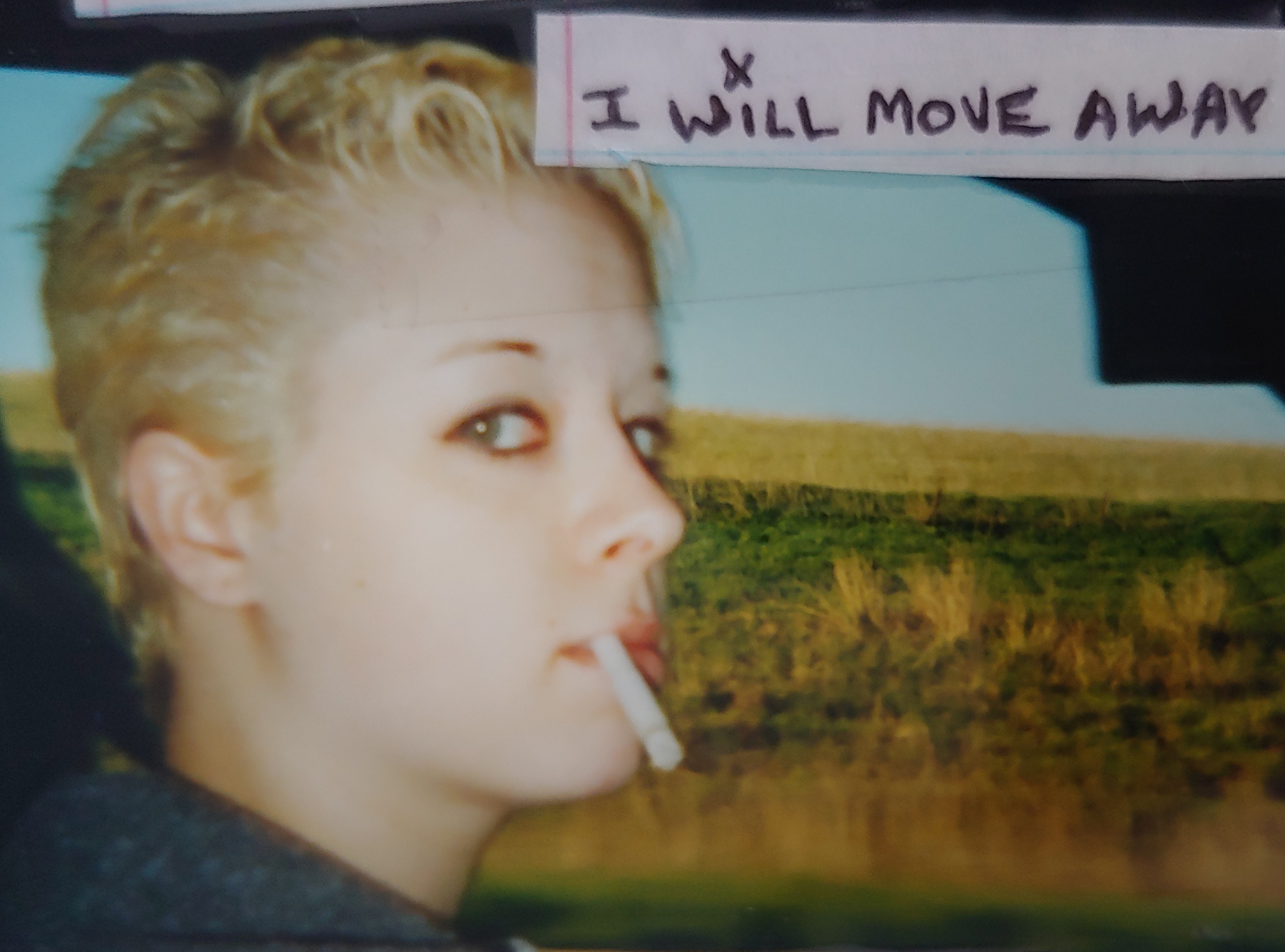 KR: I have never felt more at home anywhere than I do in Chicago. I tried to leave, and I had to come back. I don't know how to live anywhere else. I forget that I grew up in a small town in the country. To go back now is torture. It's too dark and too quiet and too open. I need the city. I have been dreaming about the city before I even saw the city.
DGE: I spent three years in South Amanda, Iowa. I grew up in Chicago, so it took a little bit of getting used to. There’s a kind of intimacy in that everybody knows everything about everybody, don't they?
KR: They do. They know before you do.
DGE: I think that background helps inform the texture of the stories, because in this novel you're both a small town and a big town girl, then woman, aren't you?
KR: Yeah, yeah. I kind of have retained the small-town politeness I think in my life and common sense and acceptance of sort of the natural order of life from growing up in such a rural area. But Chicago, you have to apply it and be prepared for different challenges. Chicago's ruthless. It'll definitely chew you up and spit you out if you're not careful, and it has to me a few times. But you just get back up and keep going.
DGE: Buried in the series of stories, it's sort of lurking way in the background, is your ambition as an artist. There are not a lot of explicit scenes or moments in which you're doing art, or even thinking about art. As a reader, I like the narrator, and I'm rooting for her. I start to feel, after a number of stories, that she needs a purpose. There’s a kind of a linear movement to her life, which is not great, in terms of her economics and her network--everything is sort of a straight line. She acknowledges this herself, not in quite those terms, but there are times in the book where the narrator is saying she really needs to do something. At times, she’s suicidal. Depression is a natural byproduct of this hard life. Tell me about your own artistic ambitions. How did you evolve as an artist, and how did that come to be a part of the book?
KR: I've always been making art. As a small child, it was like an escape. You can draw pictures and escape into the fantasy of it, and then you start telling yourself stories to go with the pictures, and then you become better at reading and writing. You start writing it down, and it existed as this secret world that I had to just slip into when reality became very unpleasant or boring. I didn't care for school at all, so many times I got in trouble for drawing pictures and writing in a notebook or drawing on myself in school. There was just this line that I constantly blurred and crossed between reality and art, As I was getting older and falling into depression, becoming aware of the status quo, and, you know, just being a moody teenager, art was always the outlet, and I never let it go. I have to make stuff. I don't have a specific medium, either. I try a little bit of everything. I love writing, and I do like to draw, but I mean, I have to. There's this drive: you got to do, you just have to go. That is your purpose. I'm not a career woman. I am not a mother. I am not a wife. I very much just want to make shit, and that's what happened with this book. I have been wanting my whole life to write a book, I have diaries from grade school where I said I'm going to write a book. Well, I finally did it, and now I'm on to the next thing. I'm working on another one, as well as a bunch of other little creative projects too.
DGE: Working on the next novel, or book? You don't know what you're calling it yet?
KR: I keep joking and saying it's going to be a book of poetry, but I don't write poetry, so I don't know. I've been taking notes and observations from life, and I'm just going to keep going. And after a while, I'll take a look and see what is this. What have I got here?
DGE: I went to graduate school to get my MFA in fiction writing, and part of the requirements were to take a few poetry courses. Poetry was daunting to me. Syracuse is a kind of an elite MFA program, and it seemed like everybody there had grown up with very educated parents, and had a certain sophistication, and that none of them came from a blue-collar family where nobody EVER read poetry. I felt different. I didn't feel confident talking about it. And then we get into this class with Brooks Haxton, who is a phenomenal man and a great poet, erudite, this really intellectual writer, and we're talking about poetry in class, and I just really don't have any idea what's going on, right? And finally, after class, I said, "Brooks, I'll be honest, this is like the fourth class, and I don't know what the fuck a poem is.” And he kind of paused and said, "Well, Don, a poem is anything you call a poem.” So if you want to call your book poetry, then I guess it's poetry, right?
KR: Yeah, it's kind of like poetry. Yeah, we'll see. We'll see when I feel like it's close to being done what I got here.
DGE: I love the painting that you use for the cover of Ornery Cuss.
KR: Oh, thank you.
DGE: Have you painted a lot of Chicago scenes? I'm naturally drawn to Chicago cityscapes. Dmitry has some outstanding ones.
KR: I have not actually. As much as I love the city, I have not done any Chicago cityscapes, but I think I'm starting to develop an eye and seeing things a little bit differently because of Dmitry's Chicago cityscapes, the buildings, the alley paintings. Like now, I'm starting to look at different scenes in the city from a lens that I never did before.
DGE: The Terry Zwigoff documentary about Robert Crumb…
DS: It's one of the best movies about art I've ever seen. I love that movie.
DGE: I love that movie too. There’s a scene where the director asks Crumb why he’s drawing all these telephone wires. And Crumb basically says that when you live in the city, you start to just edit out a lot of what city life is, and people don't even see it, but there are thousands and thousands of these telephone wires. I feel that way about your work sometimes, Dmitry. You see a little piece of an alley or a living room or a coffee shop, and that's the thing that you wouldn't have noticed. Your cover art, Krystle, I love that it captures you as a completely unabridged character, it's got that pulp fiction feel, with the hat and the rolled-up sleeves, and it prepares you for stories that come next.
KR: Thank you. It's a self-portrait, but a self-portrait of me in my 20s. I cooked with a fedora and rolled-up sleeves. I don't think I was as think and sleek in the neck back then as I I drew myself to be, I wanted something sort of gritty, a little noir-ish in a truck stop.
DGE: The stories in this book are that way, too. They are gritty, They are noirish, but also not heavy in the way you would think, based on the content of the stories. They don't read heavy. They're very troubling, but your narrative contains an honesty that is not looking for explanations so much as just the telling of the story.
KR: The cold light of day: how things are, how things happened.
DGE: Was there any thought of illustrations to go in the book. Did you think that that might be part of the project, or you never wanted that to be the focus?
KR: This one, I didn't want that to be the focus. I just wanted to tell the stories and let the readers create the images in their mind as they read. I don't know if that's how people do when they read, but that's how I do when I read. I am very brutal with myself when it comes to my drawings. So, if I draw something, I got to get rid of it like right away, because I'll just keep nitpicking at it, and, well, this book would not be done if I had put a bunch of illustrations in it. I would be obsessing over the illustrations and what scene to draw for which story and what page to go on. So this one, I didn't want that, but I do think in this next thing I'm working on, I'm going to put some illustrations in. I don't know what I'm going to draw yet, but a little bit of this and that.
DGE: Do you have a name for the new book?
KR: Not yet. I'm trying to come up with something as catchy as Ornery Cuss.
DGE: Dmitry, you said you're proud of this book. What makes you proud about this book?
DS: It's a really good book. I'm happy that I was involved with it, and it came together in in the time that [Krystle] said it would come together. I think actually finishing the painting on the cover seemed to take as long as half the writing, or at least she would put it off and put it off about the cover, I wanted her to put art in the book, too, and she wouldn't do it. There's a lot of really kind of horrible stuff that happens in this book, but she tells it in a way that undersells it. She kind of sticks the knife in without you noticing. There's some very serious stuff happening in this book, but it’s not overdramatic. Many many other writers would make this much more dramatic or overblown.
DGE: I didn’t need the author or the narrator to tell me what was going on was awful. It didn't need a name. The three-year marriage to Felix, that whole..call it a romance for lack of a better term, is the dictionary definition of dysfunctional, and codependence, right? We’re feeling this as the relationship goes, even though the narrator's not naming it or the dysfunction is not even acknowledged. There’s some awareness, but it's also like the narrator is really clever and funny and likable and we're rooting for her and we can just see this terrible stuff continuing and we want her to find a way out, and if it were more over the top, I think that would take away from that power that you instill in the reader, who wants this situation to become better.
KR: Well, there's that naivete I talked about earlier. It didn’t just didn't stick around in childhood. That three-year marriage…I was in my 30s and very naive about what it means to be in serious relationship like that,
DS: Earlier, you you're talking about how it used to be frowned upon to self-publish. I work in a bookstore currently. We have 60,000 plus books, and many, many of them were published by the Big Four or Big Five; I don't know how many big publishers are left at this point. It's just one shitty corporation. The vast majority of those, if I was King of Publishing, would not be published. These are people that sign big contracts. They have editors allegedly. I I flip through some of these books and I I'm just baffled how how anybody killed trees for it, and yet you have something like this which is just homemade made, small, and I think it stands up. it should be on any library bookshelf.
DGE: I would say the same thing about the mainstream presses as I said about self-published books: there's a crisis of competence. There are just a lot of books that don't move me. They're fine. Nothing more.
DS: They're marketed to death. We have these subcategories like “young adult” or “romantasy” or “paranormal fiction.” This is what I spend my days at the bookstore doing: dividing these books into these smaller sections and stuff. A book like this trusts a reader to figure out what is going on. It's not pre-chewing it for you. It’s making you understand by showing actual human experiences, rather than just dressing up and taking a selfie or something.
DGE: There was a time where publishers started by saying, "Hey, this is a great author, or "This is a great book." We’ve got to find the readers. I think it's opposite now. Now, it’s, “Who are the readers?” If there is not an easily identifiable audience, then literary excellence is irrelevant.
DS: Before an author signs their contract, [publishers] check how many followers they have on Instagram, what kind of reach they have and who they can connect with. These are all considerations that are for somebody else. I don't know. It's not for me.
DGE: Would Denis Johnson's Jesus' Son ever be published today? I can't imagine who would put that book out.
DS: Where Krystle spent those teenage years, on the border of Iowa and Missouri, is exactly where the big accident at the beginning of Jesus' Son happens. That's where exactly where it takes place. It was one of the places that Krystle hung out. I just gave her a biography of [Johnson], published last year, or early this year that I wrote a review of, that covers that.
DGE: Did you know Denis Johnson's work? I find some similarities in the way you both tell stories, and in your humor.
KR: I I was introduced to his work last year, so I had no idea all those years ago that Denis Johnson had this big life-changing accident just a few miles south of where I was hanging out as a teenager.
DGE: There’s never a sense, in Johnson’s work or in Ornery Cuss, that the narrator needs to explain that we're inside this very volatile, dysfunctional, dangerous world. It's the ordinary life of the people in that world, isn’t it?
KR: Yeah, very true. It takes all kinds of folks, right?
DS: It's a book called Ornery Cuss, but it's set mostly in a city, so there you already have a clue that there's some kind of tension or contrast going on. The term ornery cuss is not a city term. You know what I mean? You don't think about big city Chicago when you hear that.
DGE: Is Chicago a place where you can be an artist, Krystle, where you can you do this kind of work? Who are some of the artists you admire here?
KR: Man, you know I I work [at a Lincoln Park West record store] with a lot of great artists--musicians, and illustrators, and I'm like the writer in the mix where I work. I go to a bar or a restaurant, and there's local artists working there, dining there. There's stuff on the walls. There's music's playing over the stereo. I mean, I'm just inspired by everybody, even the people who aren't artists. I'm inspired by people who ride the bus every day with me, go into their jobs, people in the diners on their way to the rest of their day. Yeah, Chicago is way more inspiring than living in a small town. I mean, it had its merits. I'm not shitting on it; like, it's for some people, it is not for me. Chicago is where I wanted to be, and there's privacy here. There's not privacy in a small town. If you want to wave your freak flag and be an artist and live your true self here in Chicago…nobody looks twice at you. Noone's second guessing what you're up to. You're just existing, and they're existing. And I I love that privacy. And I get to go home and I get to write about it, or sit on the bus and write about it.
Donald G. Evans is the author of a novel and story collection, as well as the editor of two anthologies of Chicago literature, most recently Wherever I’m At: An Anthology of Chicago Poetry. He is the Founding Executive Director of the Chicago Literary Hall of Fame.


 Back to Blog